
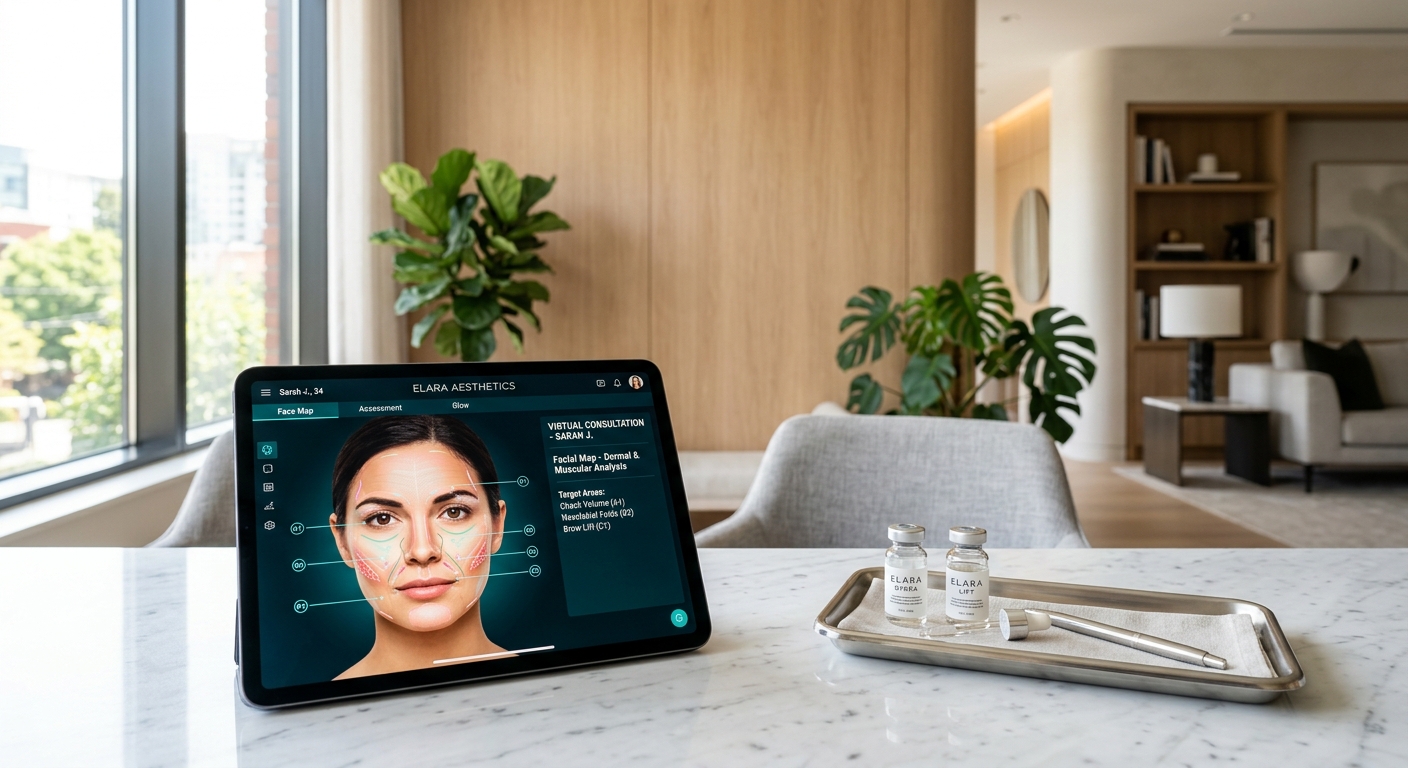
The medical spa (medspa) industry across Ontario continues to experience rapid growth. However, with this expansion comes increased scrutiny from regulatory bodies. For Medical Directors, ensuring that patient assessments—especially remote or virtual consultations—align with the College of Physicians and Surgeons of Ontario (CPSO) standards is vital to protecting licensure and guaranteeing patient safety.
The Core Rule: Under CPSO’s Virtual Care Policy and Delegation of Controlled Acts Policy, a virtual consultation for a new cosmetic patient must meet the exact same standard of care as an in-person physical assessment.
Here is an organized breakdown of what Ontario Medical Directors and aesthetic practitioners must implement to remain fully compliant when utilizing virtual consultations.
Requirement 1 Assessment Prior to Delegation
Before delegating a controlled act—such as injecting neuromodulators (e.g., Botox, Dysport) or dermal fillers—a physician or authorized provider (e.g., Nurse Practitioner) must complete a clinical assessment.
- No “Rubber Stamping”: Static online questionnaires or pre-signed medical directives without direct clinician-patient interaction violate CPSO prescribing policies.
- Clinical Assessment Timeline: CPSO delegation guidelines mandate that physicians must clinically assess new patients prior to delegating a controlled act or, where not possible, within two business days. Delegation is a physician extension, not a total replacement.
Requirement 2 Mandatory Disclosures at First Contact
During the initial virtual encounter, CPSO standards mandate specific disclosures before evaluating aesthetic goals:
- Physician Credentials: State full legal name, physical practice location, CPSO registration number, and licensure status.
- Identity Verification: Confirm the patient’s identity using two distinct identifiers (e.g., full name and date of birth).
- Room Transparency: Explicitly disclose the names and roles of all individuals present on the call (e.g., clinic nurses, observers).
Requirement 3 Identifying Virtual Care Limitations
Virtual care should supplement, not bypass, physical evaluation. Practitioners must assess whether a video screen allows them to gather sufficient visual data regarding facial anatomy, skin integrity, or previous filler placement.
Transition Rule: If poor video resolution, lighting, or lack of physical tissue palpation hinders a safe clinical decision, the patient must be scheduled for an in-person assessment.
Requirement 4 Dual Informed Consent Protocol
Practitioners must obtain and document two distinct layers of informed consent:
- Virtual Care Consent: Educating the patient on the limitations of remote care (e.g., inability to physically touch tissue) and digital privacy considerations.
- Treatment Consent: Comprehensive medical consent covering risks, benefits, alternatives, and rare complications (such as vascular occlusions or allergic reactions).
Requirement 5 PHIPA Security & Technology Standards
Using standard commercial messaging apps or social media video tools violates Ontario’s Personal Health Information Protection Act (PHIPA).
- Encrypted Platforms: Video software must feature end-to-end encryption and provide clear, high-definition video capabilities suitable for clinical assessment.
- Privacy Standards: Both provider and patient must be in secure, private settings to prevent unauthorized exposure of personal health information.
Requirement 6 Prescription Safety & Emergency Protocols
Virtually assessing a medspa patient usually leads to prescribing Schedule I medications. The Medical Director remains accountable for:
- Issuing patient-specific prescriptions or compliant, signed medical directives.
- Ensuring the physical medspa site is stocked with mandatory emergency reversal agents (e.g., Hyaluronidase for vascular occlusions, Epinephrine for anaphylaxis) and staff trained to deploy them.
Bottom Line for Ontario Medical Directors
Overseeing a medical spa in Ontario requires active clinical oversight, physical availability, and strict adherence to CPSO policies. While virtual consultations provide convenience for aesthetic patients, they cannot be used to bypass direct clinical responsibility, formal delegation procedures, or comprehensive medical record-keeping.