
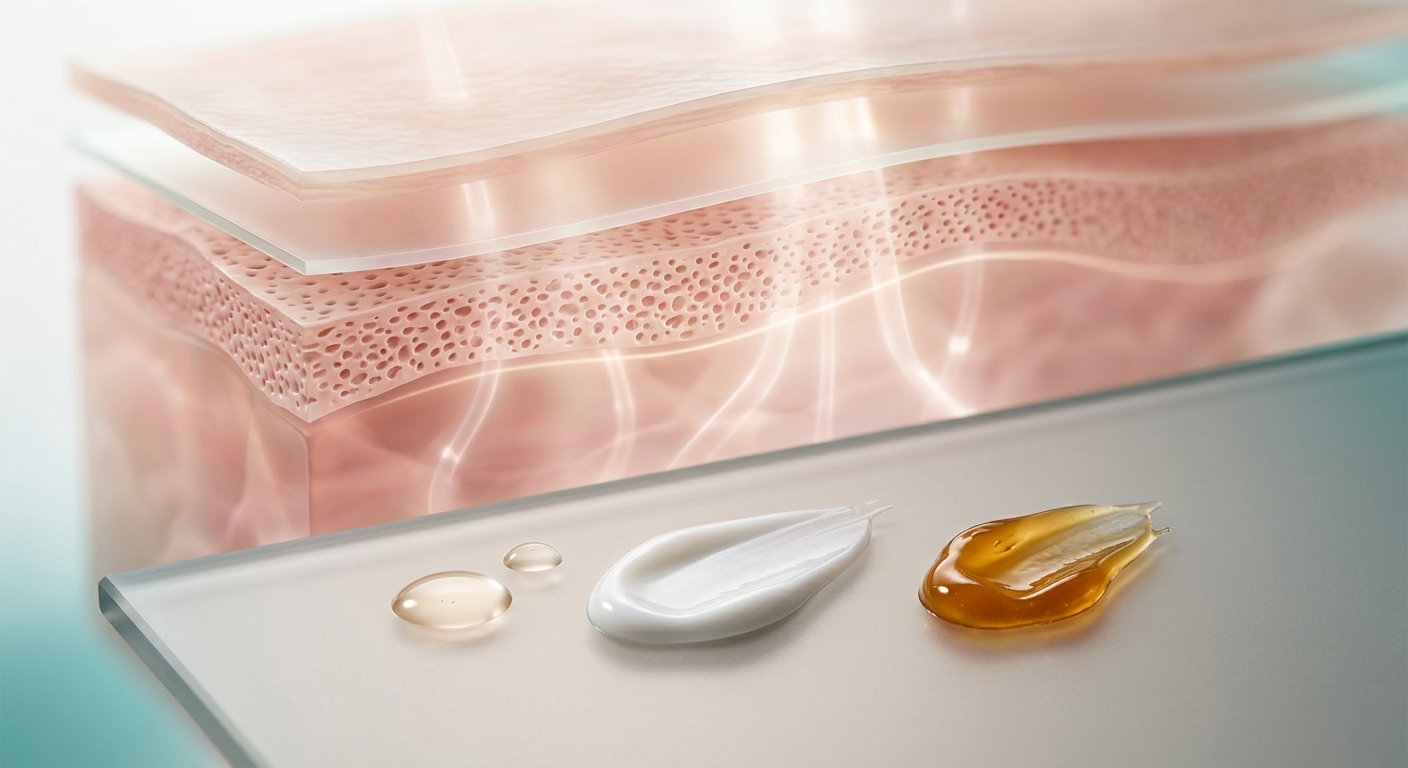
The clinical efficacy of topical dermatological therapy depends on far more than selecting the active pharmaceutical ingredient. Drug absorption is dynamically governed by the vehicle formulation, anatomical application site, stratum corneum thickness, and baseline skin integrity. Accounting for these biophysical factors is crucial to optimize therapeutic outcomes while avoiding local adverse reactions or systemic toxicity.
Prescribing Quick Reference
| Core Principle | Absorption is inversely proportional to stratum corneum thickness. Thinner barrier sites absorb significantly higher concentrations of active drug. |
| High Permeability Sites | Face, axillae, anogenital region (requires lower potency or less occlusive vehicles). |
| Low Permeability Sites | Palms of hands, soles of feet (requires high potency or occlusive vehicles like ointments). |
Anatomical Variation & Regional Permeability
Skin permeability varies dramatically across anatomical sites due to structural differences in the stratum corneum—the outermost epidermal layer that acts as the primary barrier to drug penetration.
Anatomical Site Variance Examples
- High Absorption (Thin Stratum Corneum): Areas such as the face, eyelids, intertriginous spaces (axillae), and the anogenital region permit rapid drug penetration.
- Low Absorption (Thick Stratum Corneum): Hyperkeratotic areas, palms, and soles provide a robust physical barrier that significantly limits drug flux.
- Comparative Penetration Impact: Hydrocortisone absorption from the forehead can be more than triple the amount absorbed from the ventral forearm under identical application conditions.
Vehicle Dynamics & Clinical Characteristics
The delivery vehicle dictates both the rate of drug release and the physical properties imparted to the stratum corneum. Selecting the correct vehicle is essential for managing secondary skin changes like xerosis or lichenification.
| Vehicle | Relative Absorption | Clinical Characteristics & Indications |
|---|---|---|
| Lotion | Lower | Low viscosity, non-occlusive, evaporates quickly. Ideal for acute, hairy, or exudative lesions where minimal occlusion is preferred. |
| Cream | Intermediate | Emulsion of oil and water; provides moderate hydration without excessive greasy residue. Suitable for subacute inflammation and widespread body application. |
| Ointment | Higher | Highly viscous, hydrocarbon-based (occlusive). Enhances stratum corneum hydration, promotes deep drug penetration, and provides essential lubrication for dry or lichenified skin. |
Special Considerations: Xerosis & Lichenification
In chronic dermatoses characterized by barrier disruption, the choice of vehicle serves a dual therapeutic role:
- Xerosis (Excessively Dry Skin): Ointments trap transepidermal water loss (TEWL) and provide sustained emollient benefits, assisting in mechanical barrier restoration alongside active drug delivery.
- Lichenification: Chronic rubbing or scratching produces hyperkeratotic, thickened skin plaques with accentuated markings. High-potency agents delivered in occlusive ointment bases are necessary to penetrate the dense tissue barrier.
Clinical Practice Pearls
- Match Potency to Anatomy: Avoid high-potency corticosteroids on thin-skinned areas (face, intertriginous folds) due to heightened risk of localized atrophy, striae, or systemic absorption.
- Leverage Occlusion for Hyperkeratosis: Use ointments or secondary occlusive dressings when treating thick, recalcitrant lesions on the extremities, palms, or soles.
- Consider the Barrier State: Inflamed, eroded, or denuded skin exhibits altered barrier properties that dramatically increase systemic drug availability.