
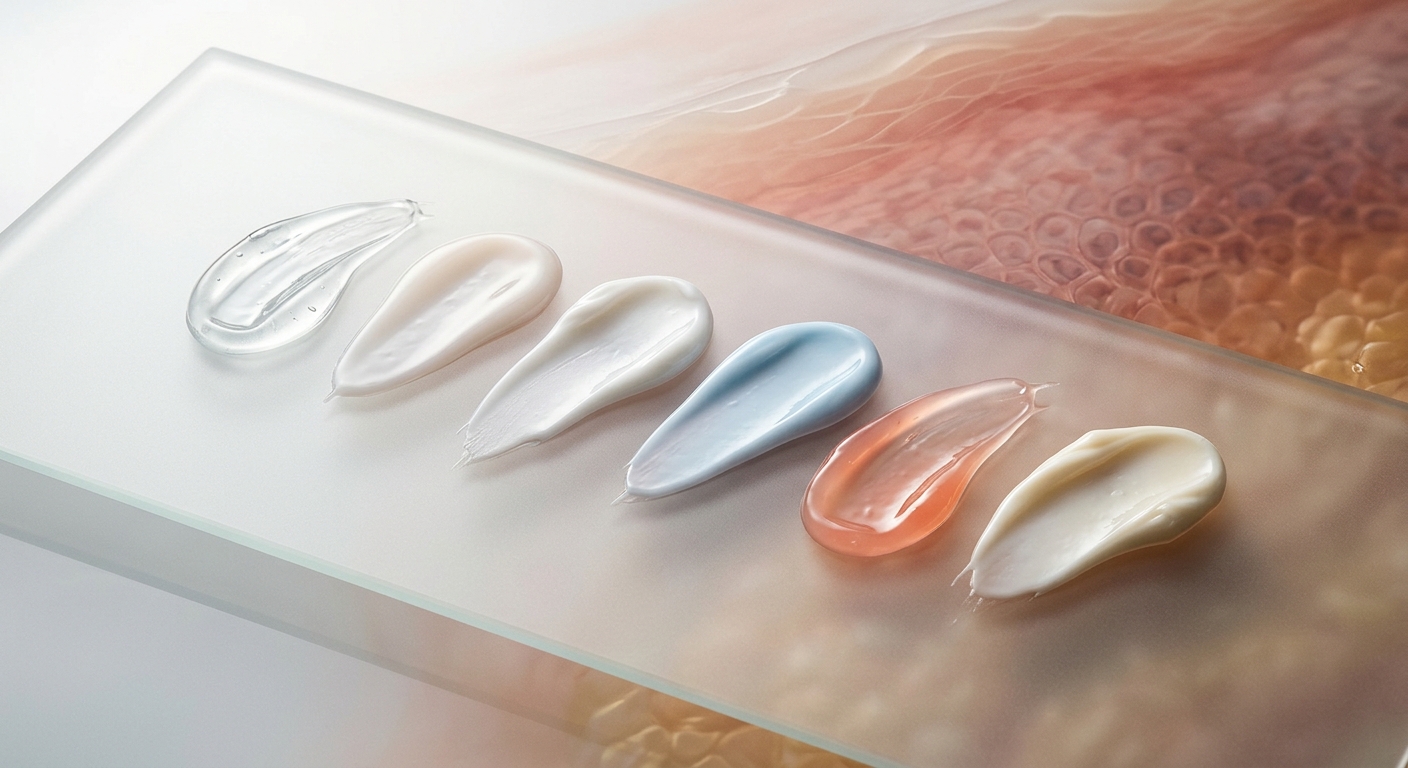
Topical corticosteroids are foundational agents in dermatology due to their potent anti-inflammatory, immunosuppressive, and vasoconstrictive properties. They are widely indicated for inflammatory dermatoses such as eczema, psoriasis, and dermatitis. However, because agents vary dramatically in strength, optimal prescribing requires balancing potency against disease severity, anatomical permeability, vehicle choice, and duration of therapy to minimize adverse effects.
Topical Corticosteroid Quick Reference
| Primary Mechanism | Anti-inflammatory, immunosuppressive, and local cutaneous vasoconstriction. |
| Potency Assay | Potency rating directly correlates with clinical vasoconstrictive activity (Stoughton-McKenzie assay). |
| Core Prescribing Rule | Use the lowest effective potency for the shortest necessary duration to achieve clinical control. |
Potency Classification (Class I to VII)
Topical corticosteroids are categorized into seven potency classes. Class I represents super-high potency agents, whereas Class VII represents low-potency preparations.
| Potency Category | Class Level | Representative Examples |
|---|---|---|
| Super-High Potency | Class I | Clobetasol propionate 0.05%; Halobetasol propionate 0.05% |
| High Potency | Class II | Fluocinonide 0.05%; Desoximetasone 0.25%; Fluocinolone acetonide 0.2%; Augmented betamethasone dipropionate 0.05% gel/ointment |
| Midrange Potency | Classes III–IV | Augmented betamethasone dipropionate 0.05% cream; Mometasone furoate 0.1% ointment; Amcinonide 0.1% |
| Low Potency | Classes V–VII | Hydrocortisone 0.5%, 1%, 2.5%; Desonide 0.05%; Fluocinolone acetonide 0.01%; Triamcinolone acetonide 0.025% & 0.1%; Hydrocortisone butyrate 0.1%; Hydrocortisone valerate 0.2% |
Selecting Potency by Anatomical Site & Condition
Matching the potency to both the anatomical barrier characteristics and the underlying pathology ensures efficacy while reducing localized or systemic complications.
Clinical Selection Guidelines
- Super-High / High Potency (Classes I–II): Indicated for resistant, hyperkeratotic, or lichenified dermatoses (e.g., psoriasis, lichen planus, nummular eczema, alopecia areata) or thick-skinned regions like palms and soles.
- Medium Potency (Classes III–V): Ideal for chronic widespread inflammatory dermatoses on trunk and extremities (e.g., atopic dermatitis, seborrheic dermatitis, stasis dermatitis).
- Low Potency (Classes VI–VII): Reserved for thin, highly permeable skin surfaces—including the face, eyelids, intertriginous/skin folds, perianal region, and diaper area.
Enhancing Absorption: Vehicle & Occlusion
Bioavailability depends significantly on formulation and application technique:
- Vehicle Impact: Formulations using occlusive bases (e.g., ointments) increase stratum corneum hydration and drug penetration compared to lighter creams or lotions containing identical active ingredient concentrations.
- Occlusive Dressings: Applying plastic wrap or occlusive tape markedly increases hydration and drug penetration. While useful for thick, recalcitrant lesions, occlusion also amplifies the risk of cutaneous atrophy and systemic HPA-axis suppression.
Critical Safety Point: Duration & Atrophy Risk
Continuous exposure to topical corticosteroids suppresses epidermal proliferation and dermal collagen synthesis, leading to progressive skin atrophy, striae, telangiectasias, and purpura.
- Class I Duration Limit: Super-high-potency preparations should not be used continuously for longer than 2 to 3 weeks without explicit reassessment and structured rest periods.
- Sensitive Site Restrictions: Avoid continuous use of Class I–III agents on thin skin (face, folds, genitals) to prevent rapid tissue thinning.
Prescribing Checklist
Prior to dispensing topical corticosteroid therapy, evaluate the following six variables:
- Diagnosis & Inflammatory Intensity: Severe or hyperkeratotic disease requires stronger anti-inflammatory activity.
- Anatomical Site Permeability: Thin skin demands low-potency formulations; thick skin requires higher potency.
- Target Treatment Duration: Plan short, pulsed courses for high-potency agents; save lower potencies for longer maintenance needs.
- Formulation Vehicle: Match vehicle (ointment, cream, lotion) to lesion type (dry/thick vs. moist/intertriginous).
- Occlusion Strategy: Reserve occlusive techniques strictly for resistant lesions under close clinical monitoring.
- Patient Age & Surface Area: Pediatric patients exhibit higher surface-area-to-body-mass ratios, increasing systemic absorption risk.
Clinical Practice Pearls
- Taper High-Potency Therapy: Gradually reduce frequency or transition to a lower-potency agent upon disease control to prevent rebound flares.
- Limit Continuous Class I Use: Cap Class I treatment regimens at 2 to 3 consecutive weeks to prevent irreversible dermal atrophy.
- Educate on Fingertip Units: Combine potency selection with FTU guidance to prevent over-application and systemic exposure.