
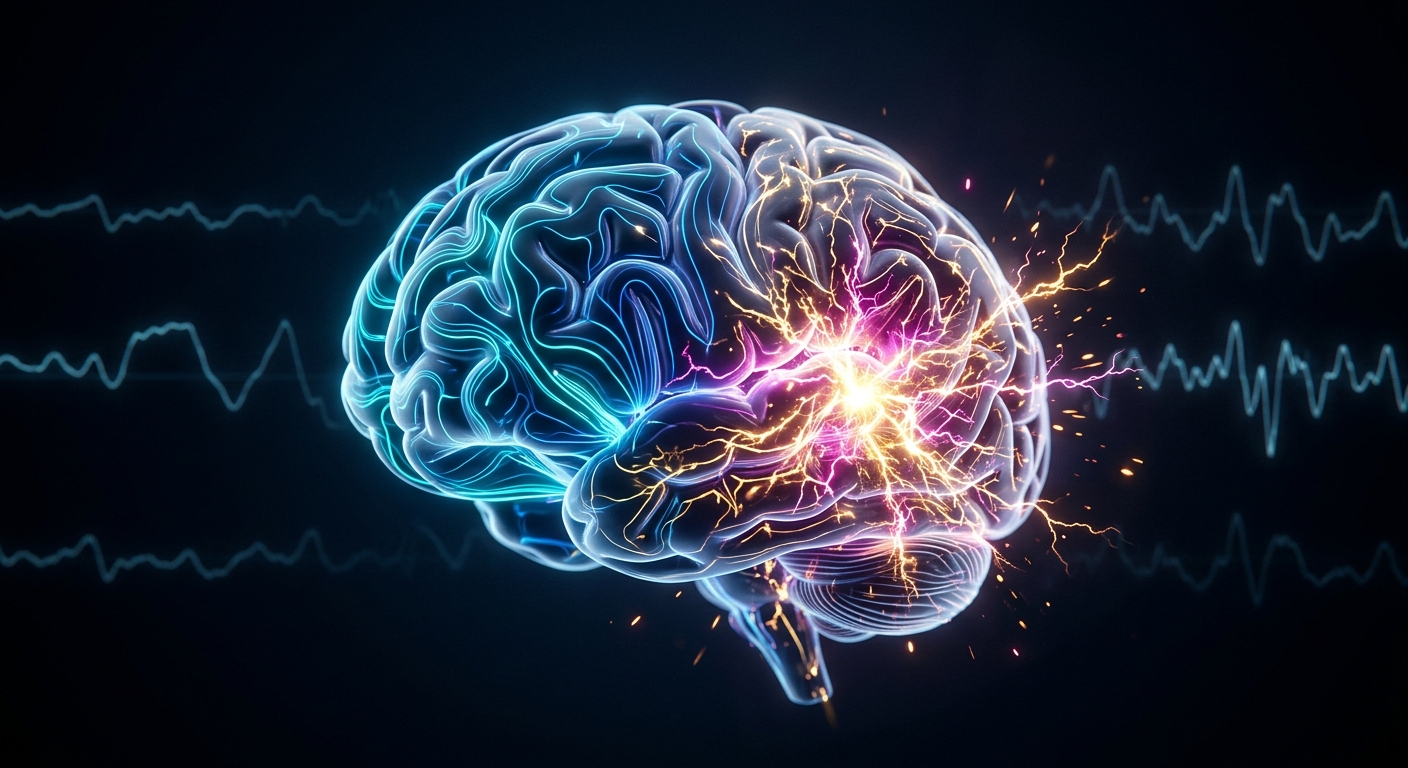
Seizures are transient episodes of abnormal, excessive, or hypersynchronized electrical activity within the brain that manifest as temporary changes in motor control, sensory perception, behavior, awareness, or autonomic function. A single seizure event does not inherently constitute epilepsy. Differentiating acute provoked seizures from unprovoked events and epilepsy is essential for guiding diagnostic workup, long-term recurrence risk, antiseizure medication initiation, and patient counseling.
Clinical Practice Rule
Distinguish Acute Provocation & Establish Recurrence Predisposition: Epilepsy is diagnosed upon encountering: (1) ≥2 unprovoked seizures occurring >24 hours apart, (2) 1 unprovoked seizure with a high predicted recurrence risk (≥60% over 10 years, e.g., structural MRI lesion or epileptiform EEG), or (3) diagnosis of a recognized epilepsy syndrome. Seizures caused entirely by transient metabolic or systemic insults do not constitute epilepsy.
1. Pathophysiology & Seizure Etiology
Normal neurophysiology requires a delicate equilibrium between excitatory (glutamatergic) and inhibitory (GABAergic) neurotransmission. Disruption of this balance leads to paroxysmal neuronal hyperexcitability and synchronized firing.
Pathophysiologic Cascade
Increased Excitatory Signaling / Decreased Inhibitory Control → Paroxysmal Depolarization Shift → Hypersynchronized Neuronal Discharge → Clinical Seizure Expression
Clinical manifestations depend directly on the anatomical site of origin, involved neural networks, extent of propagation across cerebral hemispheres, and degree of preserved vs. impaired awareness.
| Seizure Etiology | Pathophysiologic Context & Management Strategy |
|---|---|
| Acute Symptomatic (Provoked Seizure) |
Occurs in direct temporal association with an acute systemic or neurological insult (e.g., severe hyponatremia, hypoglycemia, acute stroke, traumatic brain injury, CNS infection, drug toxicity, or alcohol withdrawal). Primary management focuses on correcting the underlying reversible trigger rather than long-term antiseizure medication. |
| Unprovoked Seizure | Occurs in the absence of an acute, immediate reversible precipitating factor. May arise from an enduring structural brain injury (prior stroke, tumor, hippocampal sclerosis) or genetic predisposition. Requires diagnostic stratification (EEG, MRI) to quantify 10-year recurrence risk. |
2. Clinical Classification & Semiology
Modern International League Against Epilepsy (ILAE) classification categorizes seizures by operational onset: Focal, Generalized, or Unknown. Historical terms such as “simple/complex partial” or “grand mal/petit mal” are obsolete.
| Category | Awareness Status | Key Clinical Features & Semiology |
|---|---|---|
| Focal Aware | Preserved | Localized motor jerking (may exhibit Jacksonian march), sensory paresthesias, visual/auditory phenomena, autonomic upset (epigastric rise), or psychic symptoms (déjà vu, sudden fear). Acts as an aura when preceding network spread. |
| Focal Impaired Awareness | Impaired / Lost | Behavioral arrest with blank stare, unresponsiveness, and prominent automatisms (lip smacking, chewing, manual fumbling, vocalizations). Postictal confusion is typical. |
| Focal to Bilateral Tonic-Clonic | Variable initial; then lost | Originates focally (often with an aura or asymmetric focal motor activity) before propagating across bilateral cerebral networks into generalized tonic-clonic convulsions. |
| Generalized Tonic-Clonic | Impaired at onset | Bilateral onset. Tonic phase: Rigid muscular contraction, loss of consciousness, cry. Clonic phase: Synchronous rhythmic jerking. Frequently accompanied by tongue biting (especially lateral border), stertorous breathing, and urinary incontinence. |
| Absence | Briefly impaired | Sudden behavioral arrest and unresponsiveness lasting 5–15 seconds, often with minor eyelid fluttering. Abrupt onset and recovery without postictal confusion; classically induced by hyperventilation in pediatric populations. |
| Myoclonic | Usually preserved | Sudden, shock-like, involuntary single or multiple muscle contractions without postictal depression. Characteristic of Juvenile Myoclonic Epilepsy (JME). |
| Tonic / Atonic | Variable / Impaired | Tonic: Sudden sustained muscular stiffening leading to violent falls. Atonic: Sudden complete loss of postural muscle tone (“drop attack”) causing high injury risk. |
Postictal Phase & Focal Localizing Signs
Todd Paralysis: Transient focal neurological weakness or deficit (e.g., hemiparesis) occurring after a focal motor seizure that can persist for minutes to hours. Crucial to differentiate from acute ischemic stroke.
3. Diagnostic Evaluation & Mimic Differentiation
A comprehensive history from witnesses and smartphone video recordings of the event serve as the diagnostic foundation. Diagnostic testing aims to confirm epileptiform activity, identify structural lesions, and exclude paroxysmal mimics.
- Electroencephalography (EEG): Identifies interictal epileptiform discharges (spikes, sharp waves, spike-and-wave complexes). Supports seizure classification and syndrome identification. A normal routine interictal EEG does not rule out epilepsy (may require sleep-deprived or continuous video-EEG monitoring).
- Neuroimaging (Brain MRI): Preferred imaging modality to evaluate structural etiology (mesial temporal sclerosis, low-grade tumors, cortical dysplasia, vascular malformations). Emergency Non-Contrast CT is reserved for acute trauma, suspected hemorrhage, or emergency post-seizure evaluation.
- Laboratory Evaluation: Comprehensive metabolic panel, point-of-care glucose, serum calcium/magnesium, toxicology screen, and pregnancy testing. (Serum prolactin has limited clinical utility and is not routinely recommended).
| Paroxysmal Mimic | Key Distinguishing Clinical Features vs. Epileptic Seizure |
|---|---|
| Syncope (Vasovagal / Cardiac) |
Triggered by prolonged standing, orthostasis, or pain. Preceded by lightheadedness, diaphoresis, tunnel vision, and pallor. Recovery is rapid (<1–2 minutes) without prolonged postictal confusion. (Note: Brief myoclonic twitches can occur during syncopal cerebral hypoperfusion). |
| Psychogenic Nonepileptic Seizures (PNES) | Functional neurological disorder characterized by non-epileptic paroxysmal events. Manifests with prolonged/fluctuating duration, out-of-phase limb movements, pelvic thrusting, closed eyes resistant to opening, and absence of postictal stertorous breathing. Gold Standard Diagnostic: Video-EEG capturing a typical event without ictal electrographic changes. |
4. Pharmacological Management & Antiseizure Medications (ASMs)
Antiseizure medication selection must be tailored to specific seizure onset type (focal vs. generalized), underlying epilepsy syndrome, side-effect risks, drug interaction potential, and patient factors (e.g., age, co-morbidities, childbearing potential).
| Antiseizure Agent | Primary Clinical Indications | Key Safety, Side Effects, & Black Box Warnings |
|---|---|---|
| Ethosuximide | First-line choice for Typical Absence Seizures. | Ineffective against generalized tonic-clonic or focal seizures. GI distress, headache, lethargy. |
| Valproic Acid / Sodium Valproate | Broad-spectrum efficacy for generalized and focal epilepsy syndromes (GTCs, absence, myoclonic). | Major Teratogen: High risk of neural tube defects and neurodevelopmental delays (avoid in individuals of childbearing potential). Risk of hepatotoxicity, pancreatitis, weight gain, tremor, and thrombocytopenia. |
| Carbamazepine | First-line option for Focal-Onset Seizures. | Strong hepatic enzyme inducer (CYP3A4). Hyponatremia (SIADH-like effect), diplopia, dizziness, leukopenia, and severe cutaneous adverse reactions (SCAR/SJS/TEN; screen for HLA-B*1502). May worsen absence or myoclonic seizures. |
| Phenytoin | Focal and generalized tonic-clonic seizures; status epilepticus second-line. | Non-linear (saturation) elimination kinetics; narrow therapeutic index. Gingival hyperplasia, ataxia, nystagmus, peripheral neuropathy, and osteomalacia. Strong CYP inducer. |
| Broad-Spectrum Options (Levetiracetam, Lamotrigine, Topiramate) |
Widely used broad-spectrum agents for mixed focal and generalized epilepsy types. | Levetiracetam (behavioral/psychiatric changes); Lamotrigine (requires slow titration to avoid SJS); Topiramate (cognitive slowing, weight loss, nephrolithiasis). |
Medical Emergency: Status Epilepticus Protocol
Definition: Any convulsive seizure lasting ≥5 minutes, or ≥2 discrete seizure events without intervening full recovery of consciousness. Requires immediate emergency medical escalation.
- 0–5 Minutes (Stabilization): Maintain airway, monitor O2/vital signs, assess point-of-care capillary glucose, obtain IV access.
- 5–20 Minutes (First-Line Therapy): Administer prompt IV Benzodiazepines: IV Lorazepam (0.1 mg/kg) or IM Midazolam (10 mg).
- 20–40 Minutes (Second-Line Therapy): Administer non-sedating IV antiseizure infusions: IV Levetiracetam, IV Fosphenytoin, or IV Valproate.
5. Advanced Interventions, Drug Resistance, & Safety Guidelines
A. Drug-Resistant Epilepsy (DRE) Management
Drug-resistant epilepsy is defined as the failure of adequate trials of two tolerated, appropriately chosen, and appropriately used antiseizure medication regimens to achieve sustained seizure freedom. DRE requires prompt referral to a Comprehensive Epilepsy Center for specialized evaluation:
- Resective Epilepsy Surgery: Surgical resection (e.g., anterior temporal lobectomy, cortical lesionectomy) or Laser-Interstitial Thermal Therapy (LITT) for localized, non-eloquent epileptogenic foci.
- Neuromodulatory Devices: Surgical implantation of Vagus Nerve Stimulation (VNS), Responsive Neurostimulation (RNS), or Deep Brain Stimulation (DBS) to reduce seizure frequency when resection is non-viable.
B. Seizure First Aid & Patient Counseling
| DO (Safe First Aid Practice) | DO NOT (Dangerous Misconceptions) |
|---|---|
| • Ease the person to the floor and cushion their head. • Turn the individual onto their side (recovery position) to clear airway secretions. • Loosen tight neckwear and clear immediate surroundings of hard objects. • Time the seizure duration carefully. |
• DO NOT forcefully restrain the patient’s body or movements. • DO NOT insert any objects, spoons, or airway devices into the mouth. • DO NOT attempt to hold or grab the tongue. • DO NOT administer oral fluids or medications until fully conscious. |
Driving & Occupational Regulations: Driving restrictions are dictated by local state/provincial statutory mandates and require a mandatory seizure-free interval (typically ranging from 3 to 12 months) before driving privileges can be safely reinstated.
Clinical Practice Pearls
- Infection Screening in Acute Attacks: Prior to labeling a sudden increase in seizure frequency as worsening epilepsy, screen for underlying systemic infections, metabolic disturbances, or medication non-adherence.
- Enzyme Inducers & Contraceptive Failure: Enzyme-inducing ASMs (Carbamazepine, Phenytoin, Topiramate at high doses) increase hepatic clearance of hormonal contraceptives, leading to unintended pregnancy. Use alternative ASM regimens or high-dose/barrier contraceptive methods.
- Early Referral for DRE: Do not continue sequentially adding third- or fourth-line ASMs in patients who fail two appropriate drugs; refer early for surgical candidate evaluation.