
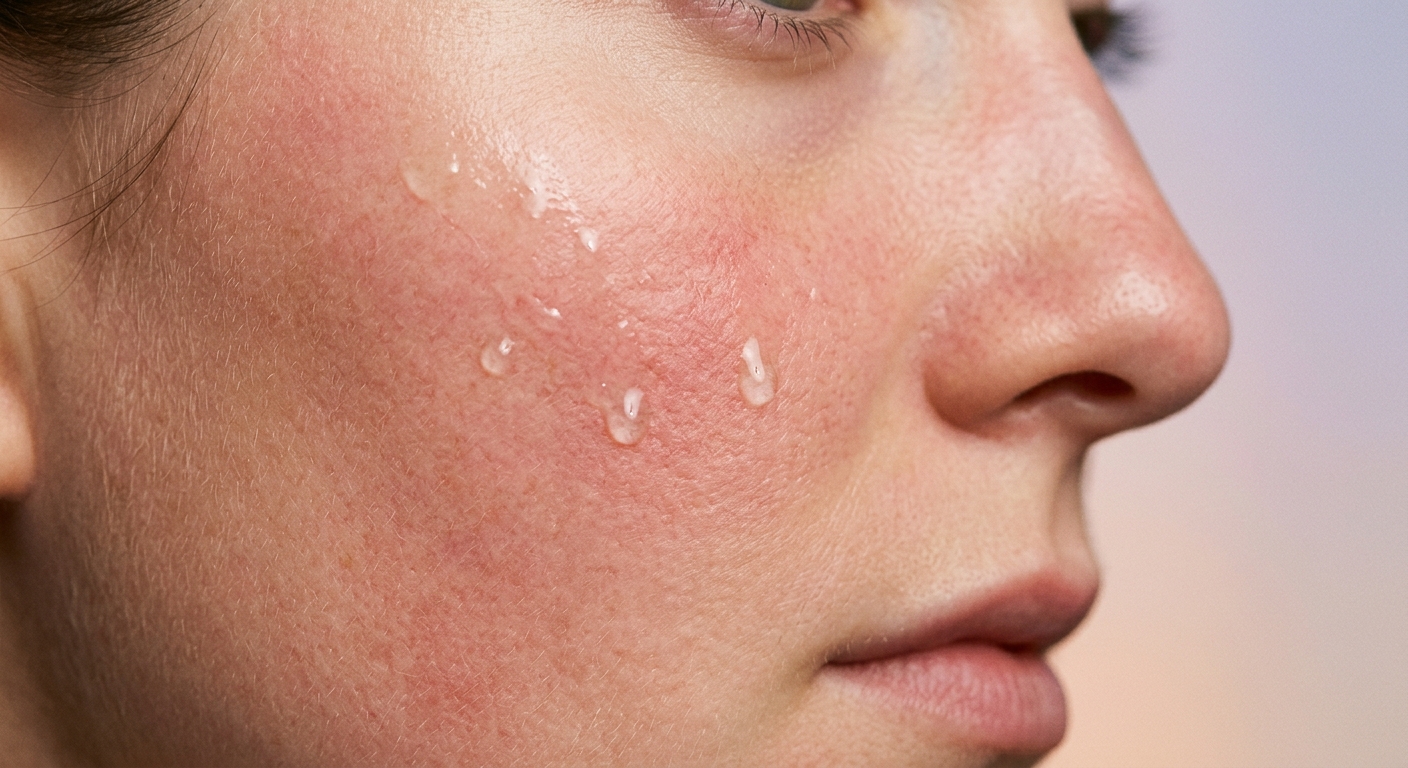
Rosacea is a chronic, relapsing inflammatory facial dermatosis characterized by flushing, persistent erythema, telangiectasias, papules, pustules, and phymatous changes. Driven by dysregulated innate immunity, neurovascular hyperreactivity, and skin microbiome alterations, its manifestations are classified into four distinct clinical subtypes.
Etiology, Microbiome Implications & Environmental Triggers
- Pathophysiology & Microorganisms: Microbes inhabiting human skin play a central role in triggering inflammatory pathways. These include Demodex folliculorum mites (which density-prefer rosacea-affected facial regions), Staphylococcus aureus, Helicobacter pylori, and yeast species such as Malassezia.
- Innate Immune Dysregulation: Up-regulated cathelicidin peptides (LL-37) and elevated kallikrein-5 (KLK5) activity induce cutaneous inflammation, angiogenesis, and vasodilation.
- Common Vascular & Thermal Triggers: UV/sunlight exposure, extreme hot or cold temperatures, physical exercise, emotional stress, hot beverages, caffeine, alcohol, spicy foods, chocolate, and harsh topicals.
- Skincare Avoidance Protocol: Patients MUST strictly avoid skin irritants, including astringents, toners, menthol, camphor, chemical exfoliants, sodium lauryl sulfate (SLS), and waterproof cosmetics requiring organic solvents for removal. Broad-spectrum daily sunscreen is essential.
1. Classification by Clinical Subtype
| Rosacea Subtype | Characteristic Features & Symptoms | Key Clinical Pearls & Differential |
|---|---|---|
| Subtype 1: Erythematotelangiectatic (ETR) |
• Central facial flushing and persistent centrofacial erythema. • Visible fine telangiectasias. • Facial burning, stinging, or skin roughness/scaling. |
• Acne Vulgaris: Differentiated by the presence of comedones (blackheads/whiteheads), which are characteristically absent in rosacea. • Systemic Lupus Erythematosus (SLE): Malar rash spares the nasolabial folds; positive ANA testing. • Seborrheic Dermatitis: Greasy yellow scales localized to nasolabial folds and eyebrows. • Steroid-Induced Rosacea: History of topical fluorinated corticosteroid overuse on the face. |
| Subtype 2: Papulopustular |
• Predominantly affects middle-aged adults (frequently women). • Persistent central facial erythema with transient erythematous papules and pinpoint pustules. • Absence of comedones. |
|
| Subtype 3: Phymatous |
• Marked tissue hypertrophy, skin thickening, and irregular nodular surface contour. • Most commonly presents as rhinophyma (bulbous enlargement of the nose), but can affect the chin, forehead, ears, or eyelids. |
|
| Subtype 4: Ocular |
• Blepharitis, conjunctivitis, eyelid hyperemia, telangiectasia of the conjunctiva/sclera. • Symptoms: Foreign body sensation, dryness, burning, tearing, photophobia. • May precede, follow, or occur independently of cutaneous signs. |
2. Diagnostic Approach & Evaluation
| Diagnostic Element | Assessment Strategy | Clinical Rationale & Considerations |
|---|---|---|
| Clinical Assessment | History & Physical Examination | Diagnosis is made purely on a clinical basis by correlating history, trigger profiles, and physical findings. No specific laboratory or histopathologic testing is required for classic presentations. |
| Laboratory / Biopsy Workup | Targeted Exclusion Testing | Indicated only when atypical features suggest alternative diagnoses (e.g., ANA for SLE, skin scrapings to rule out tinea faciei, or biopsy for recalcitrant phymatous lesions to rule out basal cell carcinoma). |
3. Comprehensive Subtype-Based Management Strategies
| Treatment Class | Agents / Intervention | Indications & Clinical Considerations |
|---|---|---|
| Topical Alpha-Adrenergic Agonists (Erythema Control) |
• Brimonidine (Mirvaso®) • Oxymetazoline (Rhofade™) |
FDA-approved specifically for persistent background facial erythema (ETR). Direct vasoconstrictive action provides noticeable reduction in redness within 1 month. Does not treat papules or pustules. |
| Topical Antimicrobials & Anti-inflammatories |
• Metronidazole 0.75% / 1% gel or cream (First-Line) • Ivermectin 1% cream (Soolantra®) • Azelaic Acid 15% gel / foam • Sodium sulfacetamide, Erythromycin, Clindamycin, Dapsone |
Primary therapy for papulopustular rosacea. Ivermectin targets both Demodex mites and inflammatory pathways. Metronidazole and Azelaic acid reduce papule/pustule counts effectively. |
| Oral Systemic Antimicrobials |
• Doxycycline (low-dose 40 mg sub-antimicrobial dose preferred) • Minocycline, Tetracycline, Metronidazole, Erythromycin |
Acts primarily through anti-inflammatory pathways rather than bacterial suppression. Preferred treatment option for Ocular Rosacea and moderate-to-severe papulopustular disease. |
| Systemic Retinoids | Oral Isotretinoin | Reserved for severe, recalcitrant papulopustular or early phymatous cases failing oral antibiotic therapy. Requires strict monitoring for adverse effects and teratogenicity. |
| Procedural & Surgical Interventions |
• Pulsed Dye Laser (PDL) & Intense Pulsed Light (IPL) • Surgical shave, electrocautery, laser ablation, mechanical dermabrasion |
PDL/IPL targets vascular structures to remodel dermal connective tissue and treat fixed telangiectasias. Surgical shave or ablative lasers are required for established phymatous rosacea (rhinophyma). |
Topical Corticosteroid Contraindication Alert
Avoid topical corticosteroids on facial rosacea lesions. Medium-to-high potency topical steroids may produce rapid initial vasoconstriction but inevitably trigger severe rebound flare-ups, steroid-induced rosacea, skin atrophy, and worsening telangiectasias.
High-Yield Exam & Practice Pearls
- Comedone Criterion: The absolute absence of comedones distinguishes papulopustular rosacea from acne vulgaris.
- Ocular Rosacea Preferred Therapy: Oral antimicrobials (e.g., low-dose Doxycycline) are the preferred treatment option for ocular rosacea to prevent corneal ulceration.
- Sub-Antimicrobial Mechanism: Doxycycline 40 mg daily works via anti-inflammatory inhibition of matrix metalloproteinases (MMPs), not bacterial eradication.
- First-Line Topicals: Metronidazole gel, Azelaic acid, and Ivermectin cream are core topical choices for papulopustular disease.
- Erythema vs. Telangiectasia: Topical alpha agonists (Brimonidine/Oxymetazoline) treat diffuse erythema; Pulsed Dye Laser treats structural telangiectasias.
- Rhinophyma Management: Advanced phymatous rosacea responds poorly to medical therapy and requires surgical or laser debulking.