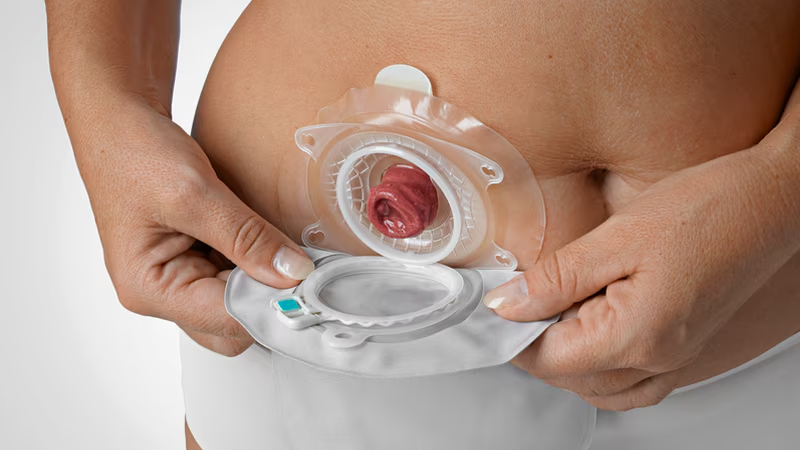
What to expect, how to eat, how to manage your stoma, and how to stay healthy during recovery
Welcome
Recovering from a colostomy can feel like a big adjustment, but most people regain confidence, comfort, and routine within the first few weeks. The key is good education and support. This guide walks you through diet, skin and stoma care, hydration, common early complications, and emotional well-being, based on expert recommendations from the American Society of Colon and Rectal Surgeons (ASCRS) and the American Gastroenterological Association (AGA).
1. The Role of Early Education and Support
Education before and after surgery is one of the most powerful ways to prevent complications. Meeting with a wound, ostomy, and continence nurse (WOCN) helps you:
- Learn how to care for your stoma and skin
- Understand what to expect as you heal
- Choose the best location for your stoma
- Feel emotionally supported and confident
This support improves your comfort, reduces skin problems, and makes daily care much easier (Davis et al., 2022; Hedrick et al., 2023).
2. What to Expect in the Hospital After Surgery
In the first few days after your operation, the healthcare team helps you:
- Start eating again
- Walk early—even the same day as surgery
- Use mostly oral (not IV) pain medications
- Have your labs checked to ensure safe healing
You’re usually ready to go home when:
- Your temperature is normal
- You’re able to eat solid food
- Your pain is well controlled with pills
- Your bowels are functioning again (Tavernier et al., 2022)
3. Eating After Your Colostomy: Early Diet, Hydration, and What to Avoid
Food and hydration play a major role in your comfort and healing during the first eight weeks.
A. Early Eating: Why It’s Important
ERAS (Enhanced Recovery After Surgery) guidelines recommend advancing to a regular diet within 24 hours of surgery when possible. Early eating:
- Helps your bowels “wake up”
- Speeds return of gas and bowel movements
- Shortens hospital stay
- Does not increase the risk of infections, leaks, or complications (Irani et al., 2023a; Irani et al., 2023b; Ljungqvist et al., 2021; Tavernier et al., 2022)
Your diet should be advanced as tolerated, and nausea or vomiting should be monitored.
B. Staying Hydrated: One of the Most Important Parts of Recovery
Dehydration is one of the top reasons patients return to the hospital after stoma surgery.
Watch for signs of dehydration:
- Dark or low urine output
- Dizziness
- Dry mouth
- Fatigue
Hydration tips:
- Drink regularly (6 to 8 cups) throughout the day
- Use oral rehydration solutions if you aren’t drinking enough
- Track intake/output in the early weeks (Davis et al., 2022; Ashley et al., 2021)
A visiting nurse may help monitor fluids, weight, and output—especially for high-risk patients (Davis et al., 2022; Ashley et al., 2021).
C. Foods to Introduce Slowly and Foods to Avoid (At First)
During the first 2–4 weeks, your healing bowel can be sensitive. Start with low-residue foods and gradually increase fiber as tolerated.
Foods to avoid early on because they may cause blockage:
- Raw vegetables
- Corn
- Nuts and seeds
- Popcorn
Foods known to increase gas:
- Beans
- Carbonated beverages
- Broccoli and cabbage
Foods that may increase odor:
General eating tips:
- Eat small, frequent meals
- Add salt if your stool output increases
- Limit sugary drinks, coffee, tea, or juice—these may increase output (Ashley et al., 2021; Davis et al., 2022)
D. Nutrition and Supplements
Some patients have a harder time keeping weight or muscle mass after surgery.
A nutrition assessment is recommended before and after surgery, especially if you:
- Are underweight
- Have lost weight recently
- Have a poor appetite
You may benefit from oral nutritional supplements if you aren’t getting enough calories or protein (Ljungqvist et al., 2021). Feeding tubes or IV nutrition are for patients who truly cannot eat enough by mouth.
E. Education and Follow-Up: A Key Part of Diet Success
A WOCN or dietitian should help you learn:
- How to progress your diet
- How to prevent dehydration
- How to manage high or low output
- What signs mean you need help
Follow-up ensures you adjust your diet safely as healing progresses (Davis et al., 2022; Ashley et al., 2021).
4. Common Early Stoma and Skin Problems (and What to Do)
Most patients have at least a small issue during the first eight weeks—it’s normal. The most common are:
A. Skin Irritation (Very Common)
Up to 73% of patients experience mild redness or soreness early on (D’Ambrosio et al., 2022; Shiraishi et al., 2024).
Why it happens:
- Leakage
- Poor pouch fit
- Moisture on the skin
How to fix it:
- Ensure the opening fits your stoma closely
- Keep skin dry
- Use barrier rings, stoma powder, and skin sealant
- Contact your WOCN for help
B. Stoma Ischemia (Poor Blood Supply)
A stoma should be pink or red. Call immediately if it turns:
- Dark purple
- Brown
- Black (Ashley et al., 2021)
C. Stoma Retraction (Stoma Pulling Inward)
If your pouch won’t stick or you have frequent leaks, you may have retraction. You may need:
- Convex pouching
- Barrier rings
- An ostomy belt (Ashley et al., 2021)
D. Leaking (Most Common Overall)
Your stoma will shrink in the first month or two. Measure it regularly so your pouch continues to fit properly.
5. Your 8-Week Success Checklist
✔ Eat small, frequent meals
✔ Drink enough fluids every day
✔ Watch for signs of dehydration
✔ Measure your stoma weekly
✔ Protect the skin around your stoma
✔ Ask for help if something doesn’t seem right
✔ Attend all follow-up visits
✔ Stay connected with your WOCN
When to Call for Help Immediately
- Stoma turns dark or black
- Severe vomiting or inability to eat
- High output or no output at all
- Fever or chills
- Skin breakdown that worsens quickly
- Repeated leakage you can’t manage
You’re Learning Something New—Be Patient With Yourself
Adjusting to a colostomy is a journey, not an overnight process. Every week you’ll feel more comfortable. With good support, hydration, the right foods, and regular follow-up, most people live full and active lives after surgery.