
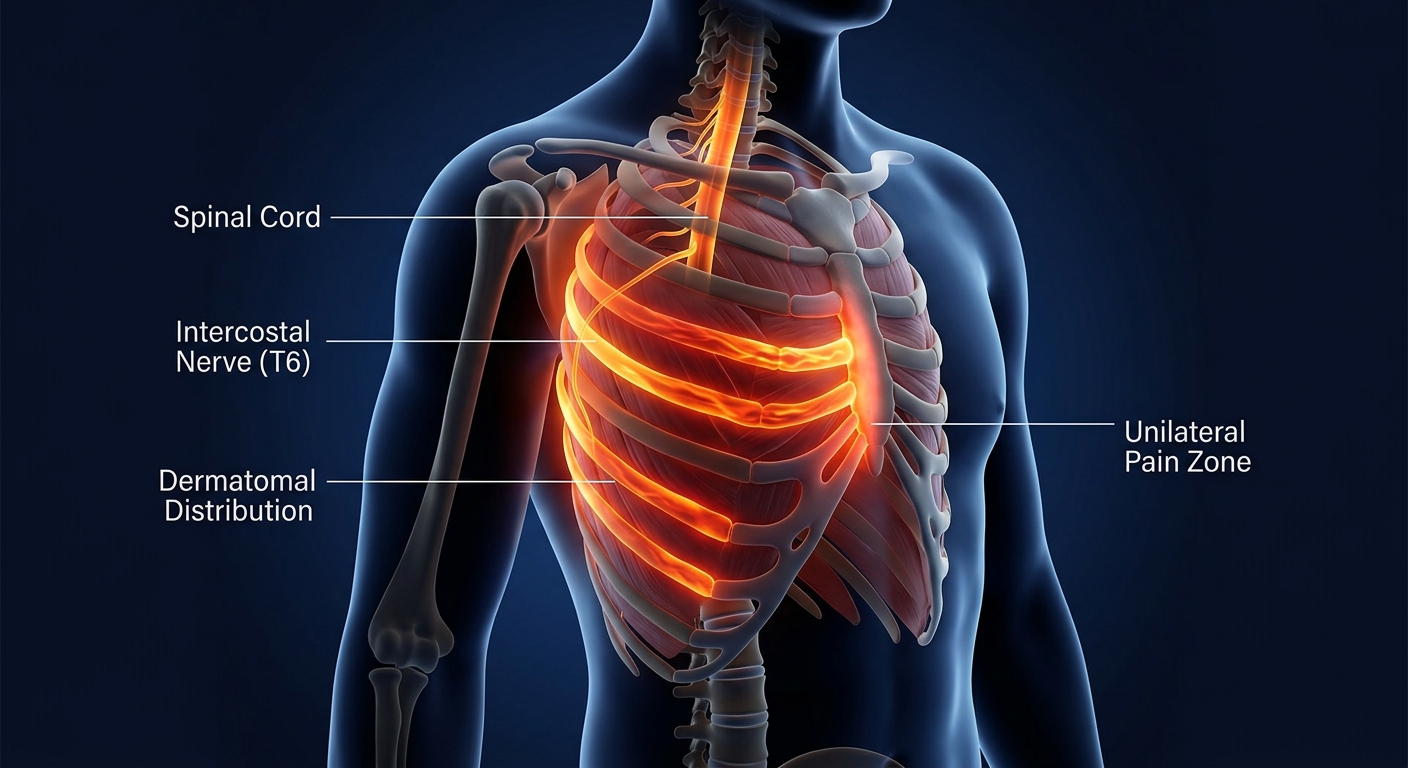
Herpes zoster (shingles) results from the reactivation of latent Varicella-Zoster Virus (VZV) in dorsal root ganglia. Clinical management centers on initiating prompt antiviral therapy within 72 hours of rash onset, mitigating severe acute pain, preserving vision in cranial nerve involvement, and preventing chronic neuropathic sequelae through vaccination.
Core Clinical Dynamics & Transmission Principles
- Pathophysiology: Following primary varicella (chickenpox), VZV remains dormant in sensory ganglia (dorsal root or cranial nerve ganglia) until cell-mediated immunity declines.
- Classic Dermatomal Distribution: Unilateral vesicular eruption strictly respecting the anatomical midline; most commonly involves thoracic (>50%) or lumbar dermatomes.
- Transmission Risk: Direct contact with active vesicular fluid sheds live VZV, transmitting primary chickenpox (varicella) to non-immune or unvaccinated individuals. Lesions cease to be infectious once fully crusted.
- Younger Adult Red Flag: Onset of zoster in adults under 50 years warrants clinical screening for underlying immunocompromise or HIV infection.
1. Clinical Progression & High-Risk Ocular Manifestations
| Clinical Phase | Timing & Duration | Dominant Symptoms | Clinical Considerations |
|---|---|---|---|
| Prodromal Phase | 1–10 days (average 48 hrs) prior to rash | Focal neuropathic pain, burning, tingling, localized itch, headache, malaise. | Pain often mimics acute cardiac, pleural, renal, or abdominal pathology before rash appears. |
| Acute Eruption | Resolves in 14–21 days | Erythematous macupapules rapidly becoming grouped vesicles, transitioning to pustules and crusts. | Severe throbbing or stabbing pain; regional lymphadenopathy. Scarring and pigmentary changes may persist. |
| Herpes Zoster Ophthalmicus (HZO) | Acute to subacute (CN V1 involvement) | Periocular pain, unilateral conjunctivitis, iritis, scleritis, lid ptosis, corneal ulceration. | Ophthalmologic Emergency. 10–15% of cases. Requires urgent specialist evaluation to prevent permanent vision loss. |
2. Acute Outbreak Pharmacotherapy & Management
| Therapy Class | Medications / Dosing | Clinical Rationale & Practice Considerations |
|---|---|---|
| First-Line Antivirals | Valacyclovir 1000 mg TID Famciclovir 500 mg TID Acyclovir 800 mg 5x/day |
Initiate within 72 hours of rash onset to accelerate lesion healing, limit viral shedding, and reduce acute pain and PHN incidence. Valacyclovir/Famciclovir preferred due to superior bioavailability and simpler dosing. |
| Adjunctive Anti-Inflammatory | Systemic Oral Corticosteroids (e.g., Prednisone taper) | Accelerates acute pain reduction and healing when combined with antivirals in severe, uncomplicated zoster. Does not reduce long-term PHN risk and is contraindicated in uncontrolled diabetes. |
| Acute Analgesia | Topical Lidocaine 5%, Burow’s solution compresses, NSAIDs, Short-course Opioids | Targeted symptomatic relief during active vesicular phase. Keep lesions clean, dry, and loosely covered with petroleum jelly to prevent clothing friction. |
Postherpetic Neuralgia (PHN) Risk & Management
Postherpetic Neuralgia is defined as persistent dermatomal neuropathic pain lasting ≥1 month after skin lesions have healed. Incidence escalates rapidly with age (~4% at 30–50 yrs vs. ~50% in adults >80 yrs).
- Gabapentinoids (First-Line): Gabapentin (Neurontin®) or Pregabalin (Lyrica®) modulate voltage-gated calcium channels to attenuate central sensitization.
- Tricyclic Antidepressants (TCAs): Amitriptyline or Nortriptyline block norepinephrine/serotonin reuptake to enhance descending inhibition (use caution in elderly due to anticholinergic side effects).
- Topical Analgesia: Lidocaine 5% patches (12 hours on / 12 hours off) or Topical Capsaicin 0.025–0.075% (applied 4–5 times daily to intact skin to deplete Substance P).
3. Prevention & Vaccination Protocols
Immunization Guidelines (ACIP Recommendations)
- Shingrix (Recombinant Zoster Vaccine – RZV): ACIP Preferred Option. Non-live, 2-dose intramuscular series (separated by 2–6 months) for immunocompetent adults ≥50 years old and immunocompromised adults ≥19 years old. Provides >90% long-term protection against zoster and PHN.
- Prior Live Vaccine (Zostavax) History: Patients who previously received the legacy live vaccine (ZVL / Zostavax) should still complete the full 2-dose Shingrix series.
- Vaccination Post-Outbreak: Indicated even in individuals with a known history of shingles. Administer once the acute episode has completely resolved and the patient is asymptomatic (typically wait ~8 weeks post-onset).
High-Yield Exam & Practice Pearls
- Hutchinson’s Sign: Vesicles on the tip, side, or root of the nose reflect involvement of the nasociliary branch of CN V1—highly predictive of ocular involvement in Herpes Zoster Ophthalmicus.
- 72-Hour Window Rule: Oral antivirals are most effective when started within 72 hours. However, if new vesicles are still forming or complications (e.g., HZO, motor neuropathies) are present after 72 hours, antiviral therapy should still be initiated.
- Ramsay Hunt Syndrome (Herpes Zoster Oticus): Reactivation in the geniculate ganglion of CN VII leads to the classic triad of ipsilateral facial paralysis, ear pain, and vesicular lesions in the external auditory canal or soft palate.
- Diagnostic Confirmation: While diagnosis is primarily clinical, Polymerase Chain Reaction (PCR) swab of vesicular fluid is the gold standard diagnostic test (far more sensitive than Tzanck smear multinucleated giant cell finding).