
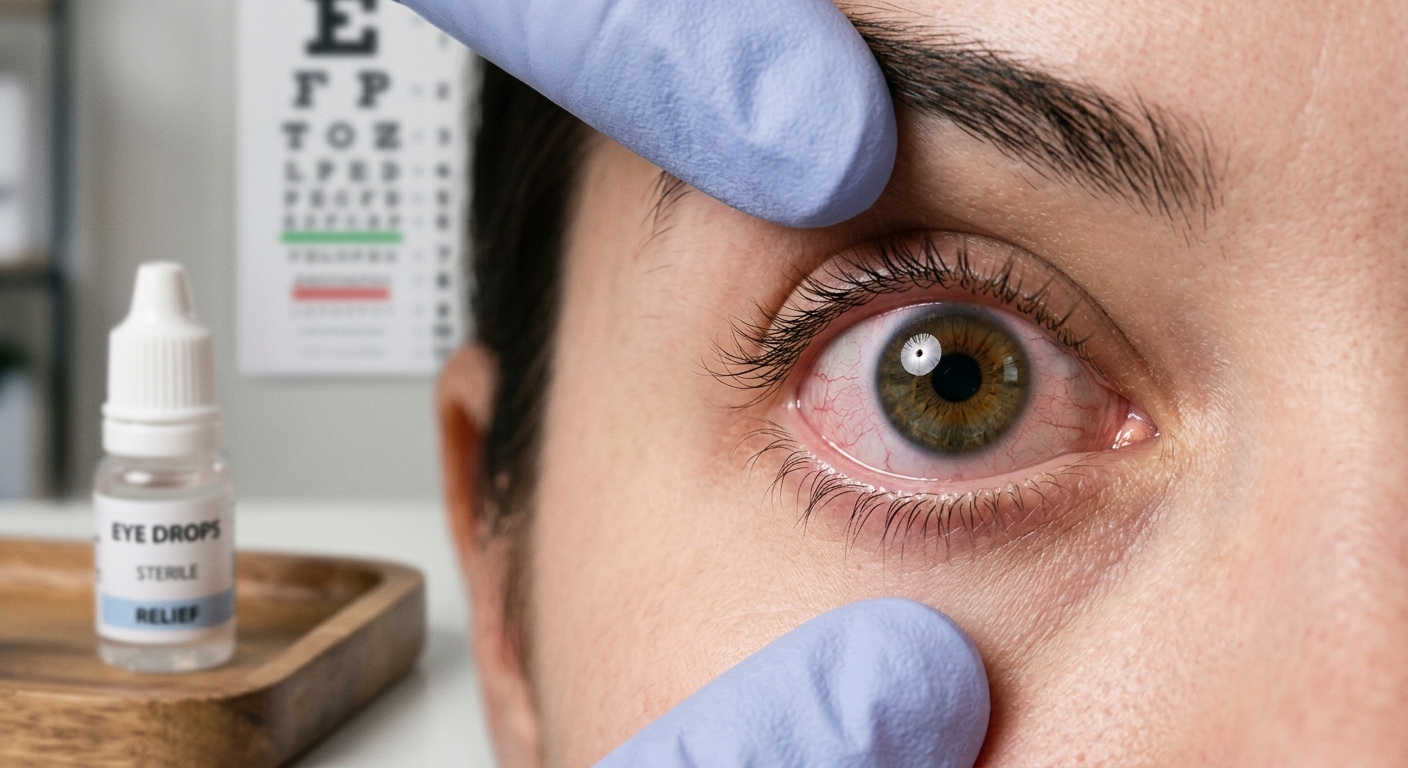
Conjunctivitis—commonly referred to as “pink eye”—is defined as inflammation of the bulbar and/or palpebral conjunctiva. While it is one of the most frequent ocular complaints encountered in primary care and emergency settings, differentiating between its primary underlying etiologies (allergic, viral, and bacterial) is critical for initiating appropriate, targeted management and avoiding unnecessary antibiotic use.
Critical Red Flags & Benchmark Clinical Marker
Baseline Diagnostic Hallmark: Uncomplicated conjunctivitis produces diffuse diffuse conjunctival hyperemic injection without photophobia, severe ocular pain, or changes in pupillary reflexes.
The presence of visual acuity loss, ciliary flush, severe deep-seated pain, or abnormal pupillary responses should immediately trigger concern for vision-threatening conditions such as acute angle-closure glaucoma, anterior uveitis, or infectious keratitis.
1. Etiology & Clinical Presentations
| Etiology | Common Pathogens / Triggers | Key Clinical Features | Diagnostic Memory Pearl |
|---|---|---|---|
| Allergic Conjunctivitis | Type-I hypersensitivity reaction to airborne allergens (seasonal pollens, dust mites, pet dander). | Predominantly bilateral presentation with diffuse hyperemia, clear watery discharge, and prominent ocular itching (pruritus). | A = “AHH, IT ITCHES!” Itching + Bilateral + Clear Discharge |
| Viral Conjunctivitis (Most Common Overall) |
Most frequently caused by Adenovirus; highly contagious via direct contact. | Profuse watery ocular discharge, ocular irritation/grittiness, and frequent association with systemic upper respiratory tract infection (URI) symptoms. | V = “VIRUS / URI” Watery Discharge + URI Symptoms + Minimal Itching |
| Bacterial Conjunctivitis | S. aureus, S. pneumoniae, H. influenzae, and atypical Streptococcal species. | Thick, purulent or mucopurulent discharge causing morning eyelid matting/crusting; typically lacks itching or systemic respiratory symptoms. | B = “BAD DISCHARGE” Thick Purulent Exudate + Eyelid Matting |
2. Rapid Differential Comparison
| Diagnostic Feature | Allergic | Viral | Bacterial |
|---|---|---|---|
| Laterality | Usually Bilateral | Unilateral → Bilateral spread | Unilateral or Bilateral |
| Discharge Character | Clear / Watery / Serous | Clear / Profuse Watery | Thick Mucopurulent / Purulent |
| Pruritus (Itching) | Prominent ⭐ | Usually Absent | Usually Absent |
| Concurrent URI Symptoms | Absent | Common ⭐ | Absent |
| Antibiotic Indication | No | No | Yes |
3. Targeted Clinical Management Strategies
| Etiology | Non-Pharmacologic Measures | Pharmacotherapy Options |
|---|---|---|
| Allergic |
|
|
| Viral |
|
Self-Limiting (1–3 weeks): Topical antibacterials offer no clinical benefit and are explicitly not indicated. |
| Bacterial |
|
|
4. Diagnostic Workup & Testing Principles
- Mandatory Visual Acuity Assessment: Snellen chart testing must be performed on every patient. Visual acuity remains intact in uncomplicated conjunctivitis; any decrement requires urgent evaluation for corneal pathology or intraocular disease.
- Point-of-Care Immunoassay: Rapid adenoviral immunoassays may be utilized when diagnostic uncertainty exists regarding viral etiology.
- Bacterial Culture & Sensitivity: Not routinely indicated for uncomplicated presentations. Reserved for cases demonstrating initial treatment failure or hyperacute purulent presentations concerning for Neisseria gonorrhoeae or Chlamydia trachomatis.
High-Yield Clinical Practice Pearls
- Itching is Key: Ocular pruritus is the single strongest clinical marker differentiating allergic conjunctivitis from infectious etiologies.
- Antibiotic Stewardship: Viral conjunctivitis is self-limiting. Routinely prescribing topical antibiotics for viral cases is ineffective and drives antimicrobial resistance.
- Infection Control Mandate: Strict contact precautions (hand washing, avoiding eye contact, using separate towels) are critical for preventing widespread transmission of adenoviral conjunctivitis.