
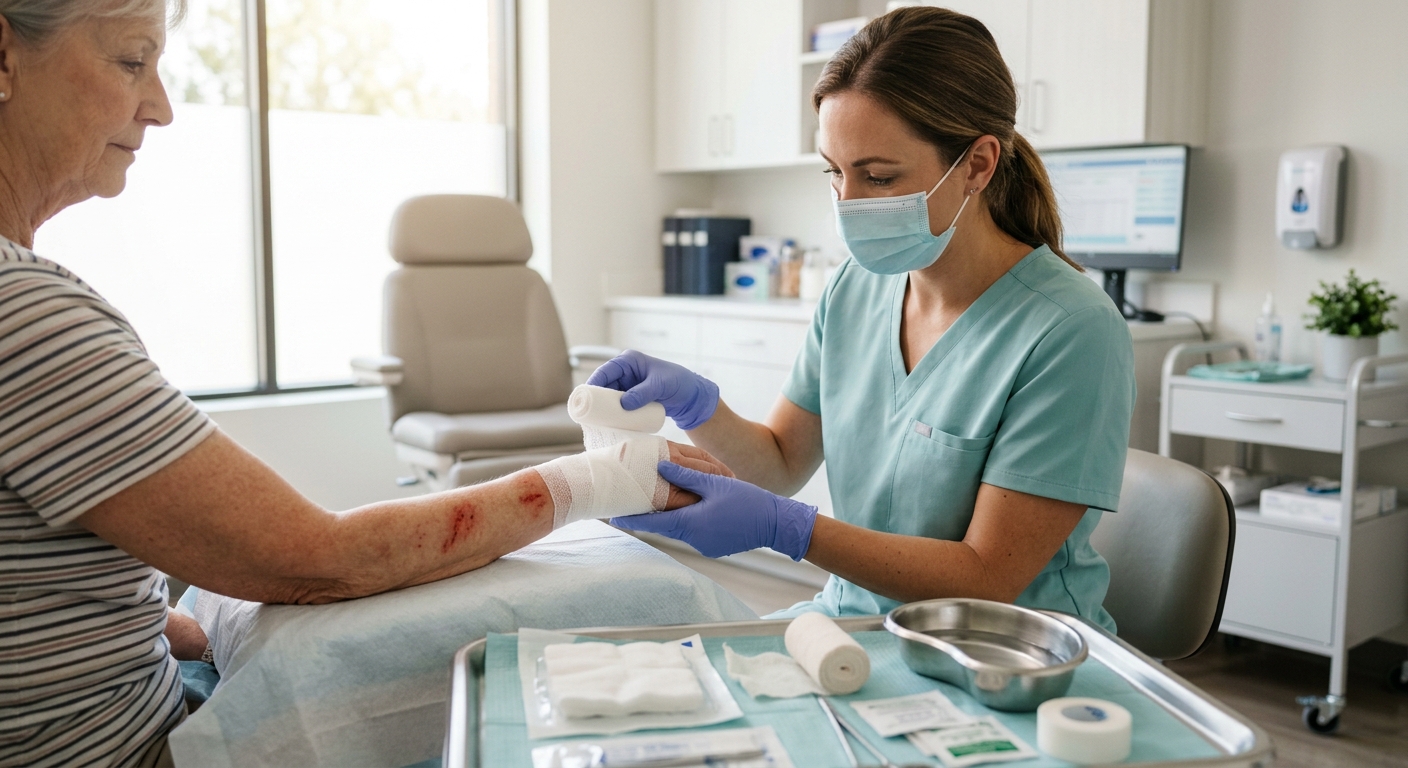
Approximately 50% of people sustain a bite wound in their lifetime, with domestic dogs and cats accounting for 80% of all presentations. Clinical management requires rapid primary triage, meticulous wound decontamination, selective primary closure, and targeted empiric antimicrobial prophylaxis based on animal species and injury characteristics.
Primary Assessment & Wound Management Steps
- Trauma Survey: Begin with a primary multisystem survey to rule out underlying neurovascular, tendinous, or structural compromise.
- Copious Irrigation: High-pressure irrigation with normal saline or tap water; debride devitalized tissue. Baseline cultures are not indicated for uninfected acute wounds.
- Closure Principles: Avoid primary closure on high-risk wounds (cat bites, hand wounds, immunocompromised hosts, dirty lesions). Primary closure is generally limited to simple, clean facial or scalp wounds presenting early (<12 hours).
- Tetanus Prophylaxis: Administer Tdap/Td booster if >5 years since last dose (for dirty wounds) or if vaccination status is unknown.
1. Wound Characteristics & Infection Dynamics
| Source | Infection Rate | Injury Mechanism | Clinical Considerations |
|---|---|---|---|
| Cat Bites | ~80% (High) ⭐ | Deep, narrow puncture wounds | Sharp teeth inoculate oral flora deep into periosteum, joint capsules, or tendon sheaths, leading to rapid-onset tenosynovitis or osteomyelitis. |
| Dog Bites | ~5% (Low) | Crushing injuries, lacerations, avulsions | High crush force causes tissue devitalization and potential underlying fracture, though overall infection rate is lower than cat bites. |
| Human Bites | High Risk | “Fight bite” (closed-fist) or occlusal wounds | Closed-fist injuries over MCP joints inoculate deep hand spaces upon finger extension; extremely high risk for septic arthritis. |
2. Species-Specific Pathogens & Antibiotic Regimens
| Bite Source | Key Pathogens | First-Line Empiric Therapy | Penicillin-Allergic Alternatives |
|---|---|---|---|
| Cat | Pasteurella multocida, S. aureus | Amoxicillin-clavulanate 875/125 mg PO BID | Doxycycline 100 mg BID OR Cefuroxime 500 mg BID |
| Dog | Pasteurella canis, Capnocytophaga canimorsus, S. aureus, Streptococcus spp. | Amoxicillin-clavulanate 875/125 mg PO BID | Clindamycin + Fluoroquinolone (Adults) Clindamycin + TMP-SMX (Pediatric) |
| Human | Eikenella corrodens, S. viridans, S. aureus, anaerobes (Bacteroides) | Amoxicillin-clavulanate 875/125 mg PO BID | Clindamycin + Ciprofloxacin (or TMP-SMX) IV: Ampicillin-sulbactam or Cefoxitin |
| Wild Mammal (Bat, Skunk, Fox) |
Streptococci, Staphylococci, Rabies Virus | Amoxicillin-clavulanate 875/125 mg PO BID | Doxycycline 100 mg PO BID (+ Rabies Immunoglobulin & Vaccine) |
| Rat | Streptobacillus moniliformis, Spirillum minus | Amoxicillin-clavulanate 875/125 mg PO BID | Doxycycline 100 mg PO BID |
| Swine | Polymicrobial Gram(+)/(-), Anaerobes, Pasteurella spp. | Amoxicillin-clavulanate 875/125 mg PO BID | 3rd Generation Cephalosporin (IV) |
| Primate | Macacine alphaherpesvirus 1 (B Virus) | Acyclovir 800 mg 5x/day OR Valacyclovir 1 g TID | Ganciclovir (Severe/CNS involvement) |
Indications for Routine Antibiotic Prophylaxis
Prophylactic oral antibiotics (typically a 3- to 5-day course) are strongly recommended for:
- All cat bites (due to 80% infection rate and P. multocida risk).
- Puncture wounds, deep tissue injuries, or crush injuries.
- Wounds involving the hands, feet, face, or genital regions.
- Wounds adjacent to bones, joints, or major tendon sheaths.
- Bites in immunocompromised patients (asplenia, cirrhosis, diabetes, chemotherapy).
- Wounds requiring surgical debridement or primary closure.
3. Post-Exposure Safety & Special Considerations
🚨 Rabies & Capnocytophaga Red Flags
- Rabies PEP: High risk with wild mammal exposures (bats, skunks, foxes, raccoons). Initiate Rabies Immune Globulin (RIG) + 4-dose vaccine series immediately unless the animal is available for a 10-day quarantine (domestic pets) or brain tissue testing.
- Capnocytophaga Infection: Dog bites in asplenic or severe liver disease patients can lead to fulminant Capnocytophaga canimorsus sepsis, purpura fulminans, and DIC.
- Child Abuse / Mandatory Reporting: Human bite marks in pediatric or dependent adult patients (especially with an intercanine distance >3 cm suggesting an adult bite) require screening for suspected physical abuse or neglect.
High-Yield Exam & Practice Pearls
- First-Line Empiric Coverage: Amoxicillin-clavulanate is the drug of choice for almost all animal and human bites to cover Pasteurella, Eikenella, staphylococci, and anaerobes.
- Cephalosporin/Macrolide Trap: Cephalexin, clindamycin monotherapy, and erythromycin have poor activity against Pasteurella multocida and should not be used as single agents for cat bites.
- Fight Bite Red Flag: Lacerations over the 3rd or 4th MCP joint require urgent surgical evaluation for extensor tendon or joint space involvement.
- Eikenella Corrodens: Fastidious Gram-negative rod inherent to human oral flora; sensitive to amoxicillin-clavulanate, but resistant to macrolides and clindamycin.