
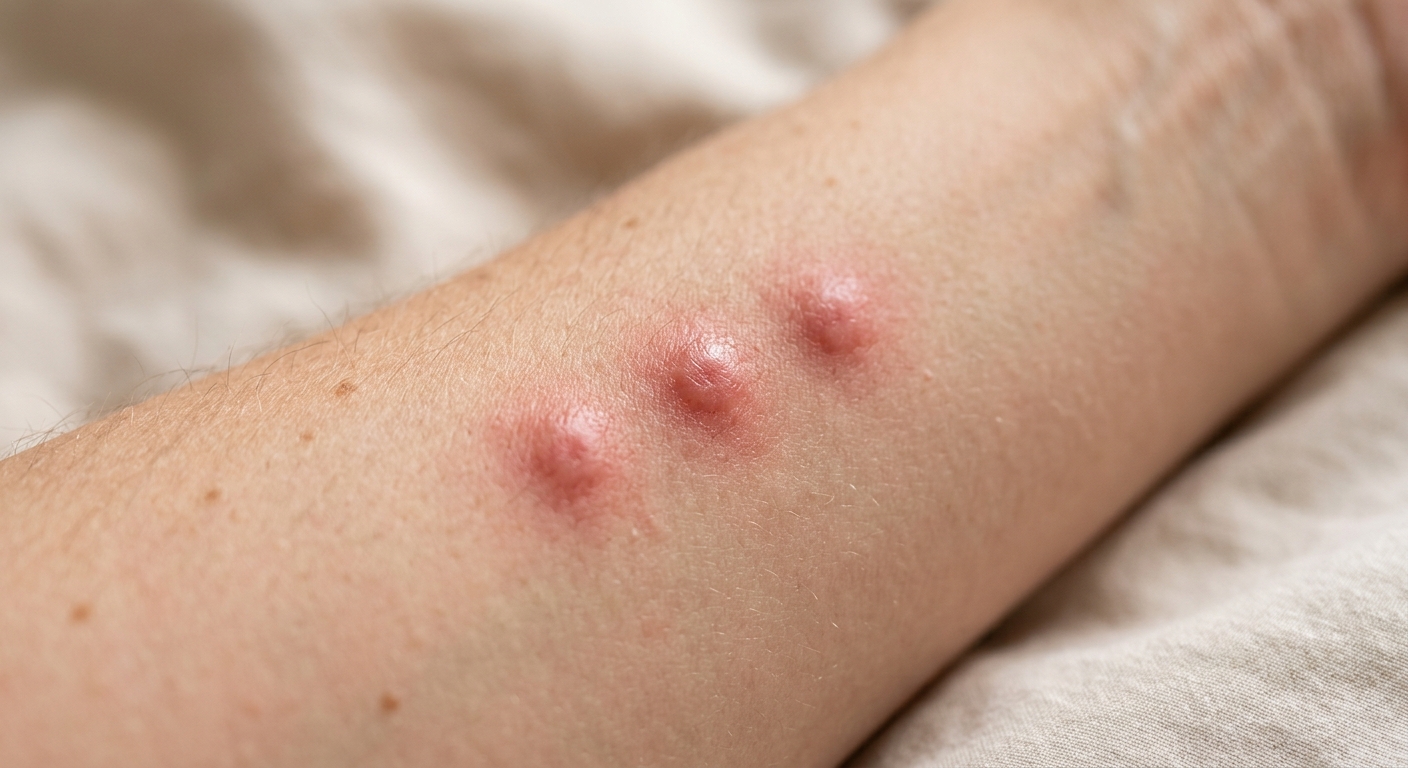
Bed bugs (Cimex lectularius) are small, wingless, reddish-brown parasitic insects belonging to the family Cimicidae. As nocturnal hematophagous ectoparasites, they feed preferentially on human skin during sleep. Global resurgence has been driven by increased international travel, resistance to conventional insecticides (such as pyrethroids), and the historical ban of persistent organochlorines like DDT.
Etiology, Vector Status & Feeding Mechanics
- Vector Capacity: Crucially, Cimex lectularius is not known to transmit infectious disease vectors to humans under natural conditions (unlike lice, fleas, or ticks).
- Feeding Attractants: Emerging from harborages predominantly before dawn, they are drawn to host body heat, emitted carbon dioxide (CO₂), physical vibration, sweat, and body odor.
- Painless Bite Mechanism: Hosts rarely wake during feeding because the bed bug injects a complex mixture of salivary proteins containing anesthetics (to dull pain) and anticoagulants (to prevent blood clotting).
- Environmental Harborages: They inhabit small cracks, mattress seams, bed frames, furniture, carpet edges, and peeling paint. Hygiene level is irrelevant—they only require a warm host and crevices to hide.
1. Clinical Presentation & Cutaneous Manifestations
| Clinical Category | Characteristic Features & Symptoms | Key Clinical Pearls & Differential |
|---|---|---|
| Classic Bite Distribution |
• Erythematous, intensely pruritic macules, papules, or wheals localized to exposed skin (face, neck, arms, hands, legs). • Linear or clustered arrangement commonly referred to as the “breakfast, lunch, and dinner” pattern (sequential feeding bites as the bug moves along skin). |
• Flea Bites: Typically localized around ankles/lower legs; central punctum present. • Mosquito Bites: Scattered, non-linear lesions on exposed areas. • Scabies: Burrows in web spaces of fingers, wrists, intertriginous folds; nocturnal pruritus. • Spider Bites: Typically single, necrotic, or ulcerated lesion. • Bullous Pemphigoid: Autoimmune autoimmune bullae in elderly; biopsy differentiates. |
| Cutaneous Spectrum & Complications |
• Reactions vary based on host sensitization (macules, papules, wheals, vesicles, or rare bullae). • Bites are self-limiting, typically resolving within 1–2 weeks. • Excoriation due to intense scratching can lead to secondary bacterial skin infections (e.g., Impetigo, Cellulitis). |
2. Diagnostic Approach & Environmental Inspection
| Diagnostic Pillar | Assessment Method | Clinical & Environmental Signatures |
|---|---|---|
| Clinical Evaluation | Patient History & Physical Exam | Diagnosis is primarily clinical based on characteristic linear itchy bite patterns on exposed body parts and recent exposure history (travel, hotel stays, second-hand furniture). Laboratory or histologic testing is not required. |
| Environmental Confirmation | Home Inspection (nighttime search) |
Confirmation relies on identifying direct physical evidence of infestation: • Fecal Spotting: Dark brown or black specks along mattress seams, headboards, and baseboards. • Exoskeletons: Light brown, shed cast skins (nymphal exuviae) in hiding crevices. • Blood Smears: Rusty or red streaks on bed sheets/pillowcases from inadvertently crushing engorged bugs during sleep. • Live Insects: Oval, flat, reddish-brown insects (~4–7 mm) visible in furniture seams. |
3. Symptomatic Management & Eradication Protocols
| Therapy Domain | Intervention / Specific Method | Clinical & Practical Considerations |
|---|---|---|
| Symptomatic Patient Care | Pruritus Control: Topical Corticosteroids (e.g., Hydrocortisone 1%) & Oral Antihistamines. |
Reduces itch and localized allergic reaction. Most mild bites self-resolve in 1–2 weeks without active medical treatment. |
| Secondary Infection: Topical or oral antibiotics / antiseptic cleansers. |
Indicated if excoriation leads to secondary bacterial superinfection (e.g., S. aureus or S. pyogenes). | |
| Eradication Strategies (Non-Chemical & Professional) |
Non-Chemical Eradication: Thermal treatment, vacuuming, and freezing. |
• Wash linens/clothing in hot water (≥120°F / 49°C). • Dry on medium-high heat for ≥20 minutes. • Freeze non-washable items at 0°F (−17°C) for ≥4 days. • Thorough vacuuming of seams, cracks, and baseboards (dispose of vacuum bag immediately). |
| Integrated Pest Management (IPM): Professional Pest Control. |
Bed bugs can survive for months without feeding. Multi-modal extermination combining non-chemical methods with chemical pesticides (insecticides) by a licensed professional is recommended. |
Insecticide Resistance Alert
Widespread resistance to standard synthetic pyrethroids (e.g., permethrin) is a major cause of treatment failure in bed bug infestations. Successful eradication almost always requires professional Integrated Pest Management (IPM) incorporating high-heat treatments.
High-Yield Exam & Practice Pearls
- Disease Transmission: Bed bugs do NOT transmit human blood-borne pathogens (unlike ticks, lice, or mosquitoes).
- Bite Pattern: Classic “breakfast, lunch, and dinner” linear or grouped configuration on exposed nocturnal skin surfaces.
- Anatomy & Physiology: Anesthetic + Anticoagulant saliva allows completely painless feeding; bugs engorge in 3–10 minutes.
- Environmental Diagnostics: Confirm via dark fecal spots on mattress seams, shed light-brown exoskeletons, and blood-stained bed linens.
- Thermal Lethality: Temperatures ≥120°F (49°C) kill all life stages (including eggs) rapidly.