
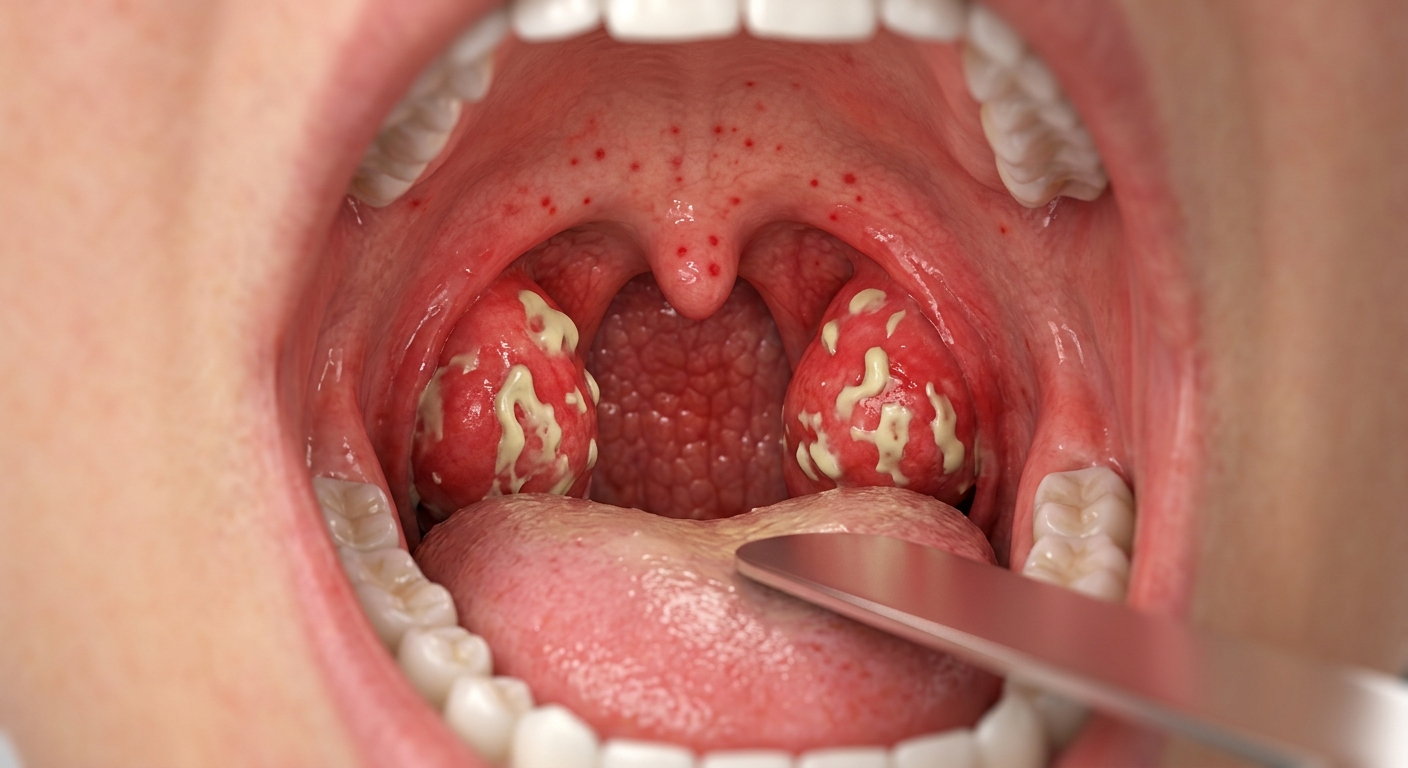
Acute Bacterial Pharyngitis is most frequently caused by Group A β-hemolytic Streptococcus (GABHS / Streptococcus pyogenes), commonly referred to as “Strep throat.” GABHS accounts for 15–40% of acute pharyngitis cases in school-aged children. The core clinical challenge lies in rapidly distinguishing streptococcal infection from self-limiting viral pharyngitis—and identifying life-threatening suppurative complications such as a Peritonsillar Abscess (PTA).
Etiology, Transmission & Clinical Presentation
- Pathogen & Spread: Streptococcus pyogenes (GABHS). Transmitted via saliva and respiratory droplets following a 3–5 day incubation period. Asymptomatic carriage is common.
- Classic GABHS Features: Sudden-onset severe sore throat, high fever, “beefy” erythematous tonsils with purulent exudates, palatal petechiae, and tender anterior cervical lymphadenopathy.
- Scarlet Fever Variant: Driven by erythrogenic exotoxins. Characterized by a fine “sandpaper” blanching rash starting on the trunk (sparing palms/soles) and desquamating during recovery.
1. Differential Diagnosis: GABHS vs. Viral Pharyngitis
| Clinical Parameter | Group A Strep (GABHS) Pharyngitis | Viral Pharyngitis |
|---|---|---|
| Sore Throat & Fever | Prominent sore throat; high fever common. | Variable severity; low-grade fever typical. |
| Tonsillar Manifestations | “Beefy” erythema, swollen tonsils, purulent exudates. | Variable erythema; exudates possible (e.g., EBV / Mononucleosis). |
| Lymphadenopathy | Tender anterior cervical nodes. | Variable; posterior cervical nodes point to EBV. |
| Upper Airway Viral Symptoms | ABSENT (No cough, no rhinorrhea, no hoarseness, no conjunctivitis). | PRESENT (Cough, rhinorrhea, nasal congestion, hoarseness, or conjunctivitis). |
2. Pharmacotherapy & Antimicrobial Regimens
| Clinical Category | First-Line Regimens | Alternative Options & Key Notes |
|---|---|---|
| First-Line Therapy | Penicillin V (Oral BID) OR Penicillin G Benzathine (IM Single Dose). | Amoxicillin PO widely used in pediatrics due to taste. Resistance to penicillins remains virtually non-existent. |
| Non-Immediate PCN Allergy | 1st-Generation Oral Cephalosporin (e.g., Cephalexin). | Low cross-reactivity risk in non-IgE mediated / mild delayed reactions. |
| Immediate / Severe PCN Allergy | Azithromycin OR Clindamycin. | ∼35% Macrolide Resistance Reserve strictly for true IgE-mediated anaphylactic reactions. |
Contagious Window & Return-to-Work Clearance
Patients with documented GABHS pharyngitis are no longer considered contagious after completing 24 hours of effective antibiotic therapy AND remaining afebrile. They may safely return to school, daycare, or work once both criteria are met.
3. Complications & Emergency Evaluation: Peritonsillar Abscess (PTA)
| Clinical Feature | Uncomplicated GABHS Pharyngitis | Peritonsillar Abscess (PTA) 🚨 |
|---|---|---|
| Sore Throat Symmetry | Bilateral / Generalized pharyngeal pain. | Markedly unilateral severe sore throat. |
| Trismus & Drooling | Absent. | PRESENT (Trismus secondary to pterygoid muscle spasm; inability to swallow secretions). |
| Voice Quality | Normal to mildly raspy. | Muffled “Hot Potato” voice. |
| Uvular Alignment | Midline position. | Deviated AWAY from the affected side. |
| Primary Action | Outpatient oral antimicrobial course. | Urgent ENT Referral + Intraoral US / CT + Needle Aspiration or Incision & Drainage. |
High-Yield Exam & Practice Pearls
- Most Common Cause: Streptococcus pyogenes (Group A β-hemolytic Streptococcus).
- Viral Absence Rule: Absence of cough, rhinorrhea, hoarseness, and conjunctivitis strongly points toward GABHS over viral etiologies.
- Sandpaper Sign: Scarlet fever = GABHS pharyngitis + fine “sandpaper” rash + circumoral pallor.
- Drug of Choice: Oral Penicillin V or IM Penicillin G Benzathine; amoxicillin preferred in children for palatability.
- Resistance Trap: Macrolides (Azithromycin) carry ∼35% resistance rates; reserve strictly for severe IgE-mediated penicillin allergies.
- Contagion Clearance: 24 hours of effective antibiotics + afebrile status = safe to return to school or work.
- P-G-R Complications: Peritonsillar abscess (suppurative), Glomerulonephritis, and Rheumatic fever (non-suppurative).
- Uvula Vector: A peritonsillar abscess always pushes the uvula away from the side of the lesion.
- PTA Red Flags: Unilateral pain + trismus + “hot potato” voice + uvular deviation = urgent ENT evaluation due to impending airway compromise risk.