
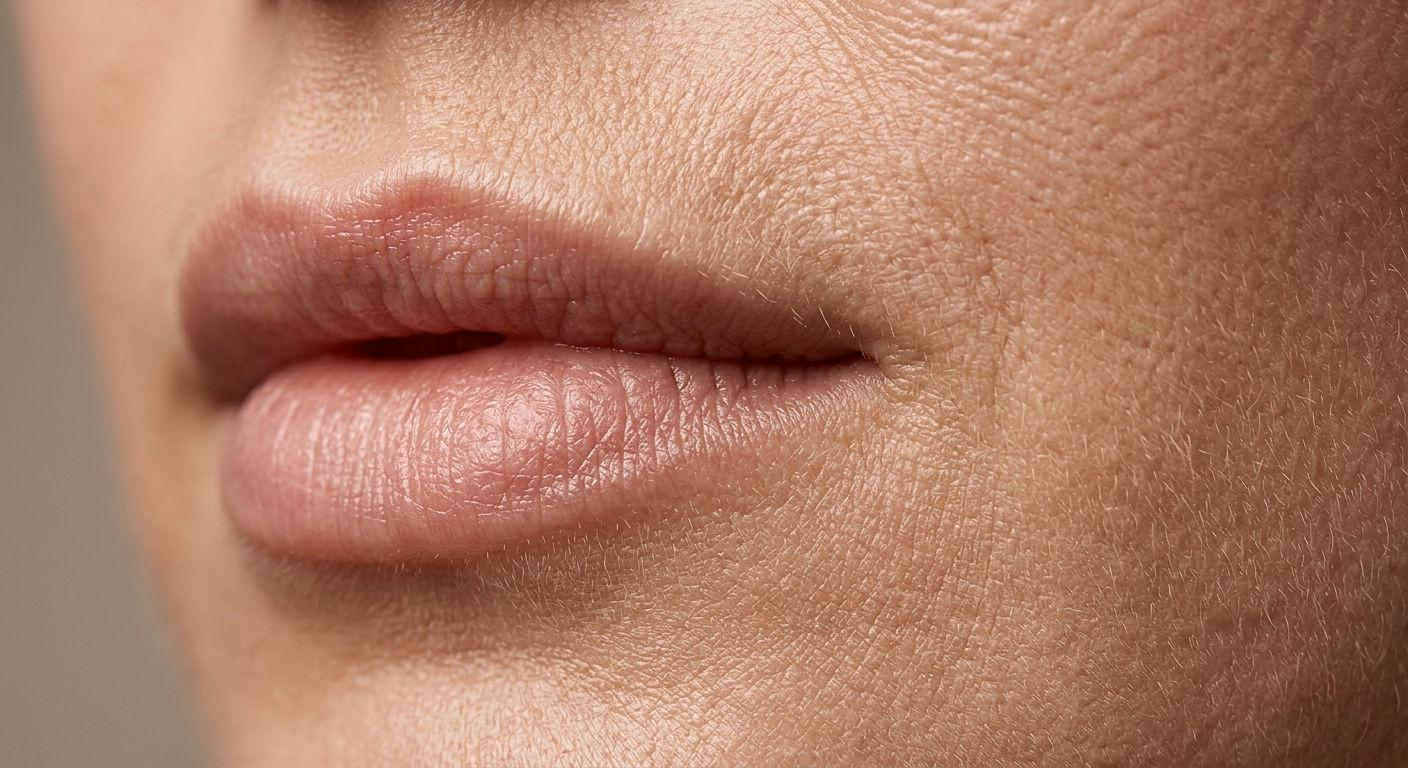
Angular cheilitis—also referred to as angular stomatitis, perlèche, or cheilosis—is an inflammatory perioral condition localized to the commissures of the mouth. Driven primarily by opportunistic fungal (Candida) or bacterial infections, its pathogenesis relies heavily on mechanical overclosure, tissue maceration, and underlying systemic predisposing factors.
Core Etiology & Risk Factor Mechanics
- Primary Infectious Pathogens: Candida albicans is the primary causative pathogen. Bacterial superinfection or co-infection—predominantly by Staphylococcus aureus or Streptococcus species—occurs frequently.
- Anatomical & Mechanical Predisposition: Loss of vertical facial dimension (edentulism, ill-fitting dentures, severe dental attrition) creates prominent skin folds at the labial commissures. Salivary pooling within these folds causes tissue maceration, providing an ideal warm, moist environment for fungal overgrowth.
- Systemic & Nutritional Triggers: Nutritional deficiencies (Iron deficiency anemia, Vitamin B12, Folate, Riboflavin/B2, or Zinc deficiencies) impair mucosal integrity and impair local tissue repair.
- Immunological Vulnerability: Immunocompromised states (HIV/AIDS, poorly controlled Diabetes Mellitus, chronic systemic corticosteroid or immunosuppressive therapy, advanced age, or severe malnutrition) significantly increase risk and severity.
1. Clinical Presentation & Diagnostic Differentiation
| Clinical Category | Characteristic Features & Symptoms | Differential Diagnosis |
|---|---|---|
| Classic Angular Cheilitis |
• Erythema, painful fissuring, scaling, and maceration at the labial commissures. • Intermittent bleeding when opening the mouth wide. • Sudden onset or chronic relapsing course. • Patient history typically reveals prolonged self-treatment with ineffective over-the-counter ointments or lip balms. |
• Herpes Labialis (HSV-1): Vesicular/ulcerative prodromal eruption, typically unilateral. • Contact Dermatitis: Reaction to toothpaste, lip balms, or dental materials. • Actinic Cheilitis: Precancerous sun-induced blurring of the vermilion border. • Oral Lichen Planus / Pemphigus: Widespread mucosal involvement. • Secondary Syphilis: Split papules at the labial commissures. |
| Associated Features |
• Coexisting oral thrush (pseudomembranous candidiasis) or denture stomatitis. • Glossitis or smooth beefy red tongue (indicative of underlying vitamin or iron deficiency). |
2. Diagnostic Approach & Laboratory Workup
| Diagnostic Step | Indication Level | Clinical Rationale & Strategy |
|---|---|---|
| Clinical Assessment | First-Line / Primary | Diagnosis is primarily clinical based on characteristic visual appearance, anatomical location, and risk factor identification. Routine swab or fungal culture is not required for typical cases. |
| Microbiological Swab / KOH Prep | Refractory / Unresponsive | Indicated when initial empiric therapy fails or when severe bacterial co-infection (crusting, exudate) is suspected. Potassium hydroxide (KOH) preparation or bacterial/fungal culture guides target therapy. |
| Targeted Systemic Workup | Recurrent / Recalcitrant | Perform target blood tests in patients with recalcitrant or recurrent disease: Complete Blood Count (CBC) with differential, Serum Ferritin, Vitamin B12, Folate, Fasting Glucose / HbA1c, and HIV screening if clinically indicated. |
| Tissue Biopsy | Rare / Atypical | Rarely indicated; reserved exclusively for refractory, non-healing, indurated, or atypical lesions to rule out squamous cell carcinoma or autoimmune dermatoses. |
3. Therapeutic Management & Prevention Protocols
| Therapy Class | Intervention / Specific Agent | Regimen & Clinical Considerations |
|---|---|---|
| First-Line Topical Therapy (Active Infection Control) |
Topical Antifungals: Nystatin ointment, Miconazole 2% cream, Clotrimazole 1% cream, or Ketoconazole cream. |
Apply BID to TID for 1–2 weeks (and continue for 1–2 days after visual resolution). Ointment formulations are preferred over creams due to superior barrier and moisturizing properties. |
| Combination Topicals: Antifungal + Low-potency Corticosteroid (e.g., Hydrocortisone 1%) OR Antifungal + Antibacterial (e.g., Mupirocin). |
Combining a mild corticosteroid rapidly alleviates painful inflammation and tissue edema. If S. aureus co-infection is suspected (e.g., golden crusting), add topical Mupirocin. | |
| Systemic Antifungal Therapy | Oral Antifungals: Fluconazole (50–100 mg daily for 7–14 days). |
Reserved for recalcitrant cases, immunocompromised patients, or severe coexisting oral candidiasis / denture stomatitis when topical therapy fails. |
| Mechanical & Preventive Care | Petroleum Jelly (Vaseline®) or zinc oxide barrier creams. | Applied regularly after active infection resolves to maintain moisture balance, prevent tissue maceration, and shield commissures from saliva. |
| Underlying Risk Correction | Prosthodontic adjustment, nutritional supplementation, glucose control. | Re-establish vertical facial dimension via updated dentures; correct underlying iron or vitamin B-complex deficiencies; optimize blood glucose levels in diabetic patients. |
Denture Hygiene Protocol for Denture Wearers
In patients with coexisting denture stomatitis, treating the mouth alone leads to rapid reinfection from contaminated acrylic prostheses.
- Soaking Protocol: Dentures must be removed at night and soaked in an appropriate antiseptic or antifungal solution (e.g., Chlorhexidine gluconate or dilute sodium hypochlorite for non-metal dentures).
- Topical Treatment: Apply topical antifungal ointment directly to the tissue-bearing surface of the clean denture prior to insertion.
High-Yield Exam & Practice Pearls
- Primary Etiology: Candida albicans is the most common single pathogen responsible for angular cheilitis, though mixed fungal-bacterial (S. aureus) co-infections are frequent.
- Classic Risk Group: Elderly edentulous patients with collapsed vertical dimension leading to salivary pooling within deep commissural skin folds.
- Nutritional Red Flags: Unexplained or recurrent angular cheilitis in a young or non-edentulous patient warrants evaluation for Iron Deficiency Anemia, Vitamin B12 / Folate deficiency, Celiac disease, or Malabsorption.
- Formulation Preference: Antifungal ointments (e.g., Nystatin ointment) are clinically superior to creams because they provide a lipid-based protective moisture barrier against saliva.
- Refractory Cases: Always evaluate for poorly controlled Diabetes Mellitus or HIV infection in severe, non-healing, or rapidly recurring perioral candidiasis.