
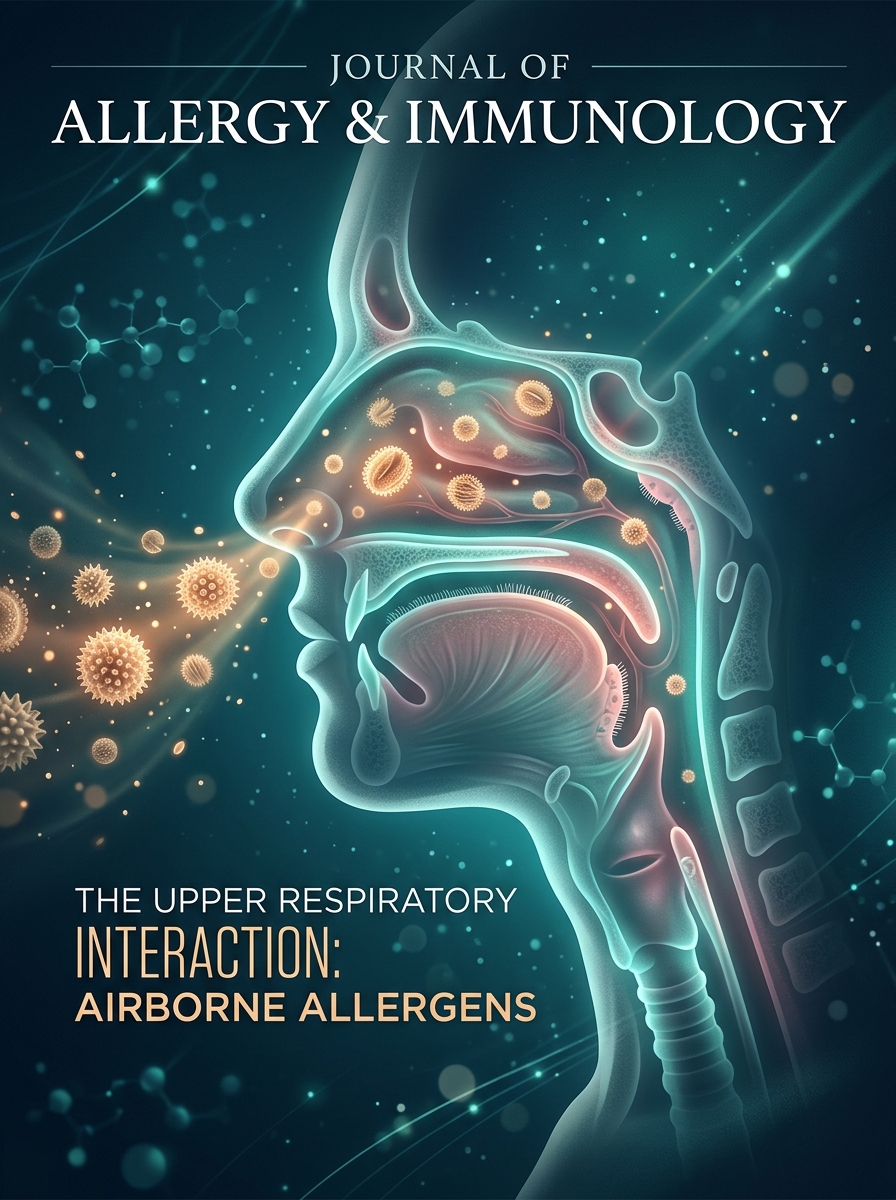
Allergic Rhinitis (AR) is an IgE-mediated inflammatory disorder of the nasal mucosa triggered by an interaction between genetic predisposition and environmental allergen exposure. Upon repeat exposure, allergen-specific IgE activates mast cells, releasing histamine and secondary inflammatory mediators that drive classic upper airway symptoms.
Pathophysiology, Symptom Profile & Trigger Categories
- Core Pathophysiology: Type I Hypersensitivity Reaction. Allergen exposure → Specific IgE cross-linking on mast cells → Degranulation & immediate release of pre-formed histamine → Late-phase recruitment of eosinophils and T-lymphocytes causing chronic mucosal inflammation.
- Symptom Constellation: Paroxysmal sneezing, nasal/ocular/palatal itching, clear anterior rhinorrhea, and nasal congestion/obstruction.
Diagnostic Pearl: The combination of itching + sneezing + clear rhinorrhea strongly points to an allergic etiology over infectious (viral) or non-allergic causes. - Trigger Categorization:
- Perennial (Year-Round): Dust mites (most common perennial trigger), pet dander, cockroaches, and indoor mold spores.
- Seasonal: Tree, grass, and ragweed pollens (frequently associated with concomitant allergic conjunctivitis).
1. The ARIA Classification Framework
| ARIA Axis | Classification Category | Diagnostic Criteria & Clinical Thresholds |
|---|---|---|
| Frequency Dimension (Rule of 4s) |
Intermittent | Symptoms present <4 days per week OR for <4 consecutive weeks. |
| Persistent | Symptoms present ≥4 days per week AND for ≥4 consecutive weeks. | |
| Severity Dimension | Mild | Normal sleep, no impairment of daily activities/sports/work/school, and symptoms are not considered troublesome. |
| Moderate-Severe | Presence of ≥1 of the following: sleep disturbance, impairment of daily activities/work/school, or troublesome symptoms. |
2. Pharmacotherapy & Drug Profiling
| Medication Class | Therapeutic Role | Target Symptoms | Clinical Mechanics & Key Warnings |
|---|---|---|---|
| Intranasal Corticosteroids (INS) (Fluticasone, Triamcinolone) |
Controller Backbone |
Nasal congestion, global mucosal inflammation, sneezing, rhinorrhea. | Most effective overall agent. Requires continuous use for days to 2 weeks for peak efficacy; not for immediate acute rescue. |
| Second-Gen Oral Antihistamines (Loratadine, Cetirizine, Fexofenadine) |
Rescue / First-Line | Sneezing, nasal/ocular itching, clear rhinorrhea. | Minimally sedating H₁-receptor antagonists. Minimal effect on nasal congestion compared to INS. |
| Intranasal Antihistamines (Azelastine) |
Rescue / Rapid Control | Rapid local relief of sneezing, itching, and nasal discharge. | Fast onset (<15–30 mins). Excellent as single agent or combined with INS for moderate-to-severe disease. |
| Intranasal Ipratropium Bromide | Targeted Rescue | Profuse, watery rhinorrhea ONLY. | Anticholinergic agent that blocks parasympathetic secretory output. Has no effect on congestion or itching. |
| Topical Nasal Decongestants (Oxymetazoline) |
Rescue (Short-Term) |
Severe acute nasal congestion / obstruction. | Alpha-agonists inducing rapid vasoconstriction. Warning: Limit to <5 consecutive days to prevent Rhinitis Medicamentosa. |
| Leukotriene Modifiers & Mast-Cell Stabilizers (Montelukast, Cromolyn) |
Secondary Controller | General inflammatory suppression. | Secondary controller alternatives; significantly less potent overall compared to INS. |
Critical Safety Red Flag: Rhinitis Medicamentosa
Topical nasal decongestant sprays (e.g., oxymetazoline) must be limited to less than 5 consecutive days. Prolonged use causes downregulation of vascular alpha-receptors (tachyphylaxis) leading to severe, refractory rebound nasal congestion (rhinitis medicamentosa) upon discontinuation.
3. Symptom-Driven Treatment Algorithms
| Clinical Scenario | First-Line Management Strategy | Escalation / Refractory Options |
|---|---|---|
| Dominant Nasal Congestion / Obstruction | Intranasal Corticosteroid (INS) monotherapy. | Add short-term oral decongestant for breakthrough blockage. If refractory, escalate to INS + Intranasal Antihistamine combination therapy; evaluate for septal deviation or nasal polyps. |
| Intermittent Sneezing, Itching & Rhinorrhea | Oral 2nd-generation antihistamine OR intranasal antihistamine. | Escalate to continuous INS therapy if symptoms persist or increase in frequency. |
| Mild Presentation (Intermittent or Persistent) |
Oral 2nd-generation antihistamine or low-dose INS. | Escalate to standard-dose INS or combination intranasal therapy if symptom control is incomplete. |
| Moderate to Severe Presentation (Intermittent or Persistent) |
Intranasal Corticosteroid (INS) monotherapy OR combination therapy (INS + Intranasal Antihistamine). | If refractory, order formal allergy testing (skin prick/serology), intensify environmental controls, and refer for allergen-specific immunotherapy. |
High-Yield Exam & Practice Pearls
- Pathophysiology: IgE-mediated Type I hypersensitivity reaction causing mast cell degranulation and histamine release.
- Classic Quadrad: Paroxysmal sneezing + nasal/ocular itching + clear rhinorrhea + nasal congestion.
- Primary Triggers: Dust mites = #1 perennial trigger; trees, grasses, and ragweed = primary seasonal pollens.
- ARIA Rule of 4s: Intermittent (<4 days/wk OR <4 consecutive wks) vs. Persistent (≥4 days/wk AND ≥4 consecutive wks).
- Severity Divider: Any impairment of sleep, daily activities, work, school, or troublesome symptoms elevates classification to Moderate-Severe.
- Backbone Therapy: Intranasal corticosteroids (INS) are the single most effective controller class for overall symptom relief.
- Isolated Symptom Targeting: Intranasal ipratropium bromide specifically treats profuse watery rhinorrhea without altering congestion.
- Rebound Warning: Cap topical decongestant sprays at <5 days to prevent rhinitis medicamentosa. Routine oral systemic steroids are NOT recommended.